Showing posts with label quality. Show all posts

Sunday, November 10, 2019

Gin 402: Dissecting a Cocktail: 101 ways to Martini

Someone walks into your bar and asks for a martini. What do you make them? The following are 12 examples of the classic drink. this showcase should run the gamut of what this drink can be. There are a couple variables that aren't directly measured like how many olives do you want in your dirty martini but pish. P.s. Please don't drink all of these in one sitting. It's actually a lot of fun to batch them all up and do 6 1/2 ounce pours of them to really learn your own palette and tastes.

50/50 Martini
1.5oz. Plymouth Gin, 1.5oz. Dolin Dry Vermouth, 1 dash Orange Bitters, Garnish: Lemon Twist
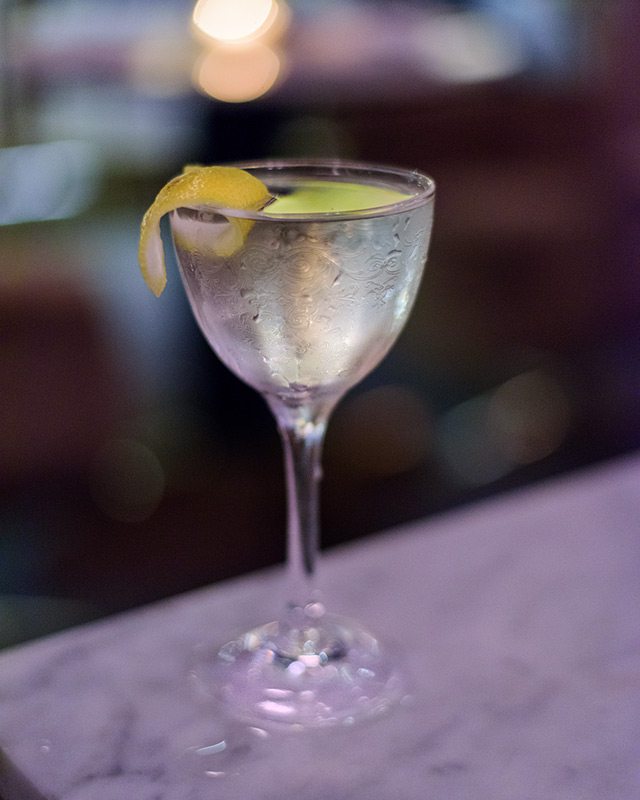
Add these ingredients to a mixing glass. Stir until well chilled (about 30 seconds). Strain into a chilled cocktail coupe and garnish with a twist of lemon.
This cocktail is actually much closer to the historical Martini recipe than any other drink on this list. The others are substantially more alcohol forward, which became a bit of a trend in the 60s, nearly a century after its likely invention. This recipe showcases how vermouth can add beautiful delicate flavors to the cocktail and let you enjoy yourself without getting too plastered. Finding a balanced ratio between the two main ingredients is truly a matter of personal preference. Some people go classic with a 2:1 ratio of gin:vermouth. Others like 5:1, 8:1, or even 1:2, with more vermouth than gin. Nothing is set in stone.

Churchill Martini
2.5oz. Beefeater London Dry Gin, Garnish: Olive
Stir gin with ice while glancing at an unopened bottle of dry vermouth. Olive garnish
This was indeed how the legendary British Prime Minister ordered his cocktail. He kept it purely British, no French or Italian spirits tainting his gin. Boozy for sure. Fun fact: also how Eggsy took his Martini in the film Kingsman: The Secret Service. A simple riff on this recipe is the In-and-Out Martini. No, not the west coast burger joint. Simply rinse a chilled martini glass with around a quarter ounce of vermouth, coating the glass. Then dump it out. Strain in your chilled gin (or vodka), and bang, gin with essence of vermouth.

Vodka Martini, Shaken not Stirred
2.5oz. Vodka (I recommend Ketel One), 0.5oz. Martini Dry Vermouth, Garnish: Olive
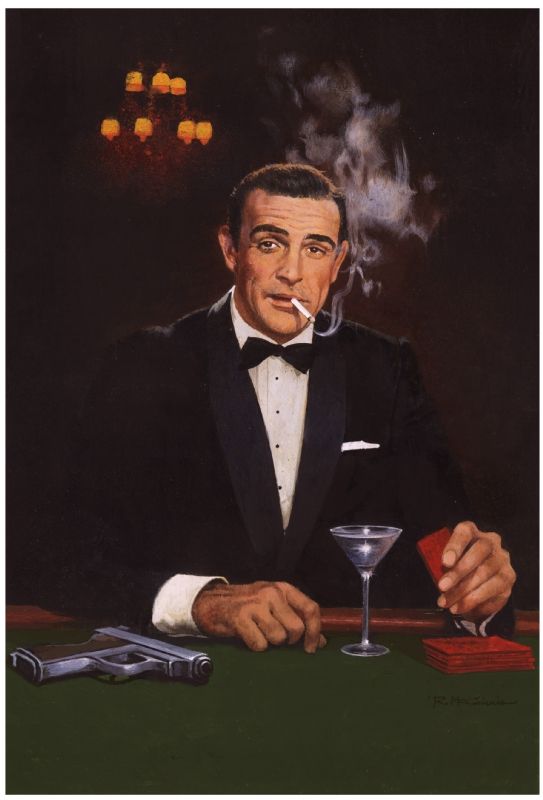
Add your ingredient to a three-piece shaker with ice. shake until chilled (8-10 seconds). strain into a chilled martini glass. Garnish with an olive on a pick. 
Yes, we're going the James Bond route. Well, rather the Sean Connery route. There's some debate as to how this drink became so popular. This was how bond ordered it in the 6th book "Doctor No", which was the first Sean Connery film. But Bond had invented and drank countless other drinks throughout the many books. I'm sure someone has counted them. This drink is unnecessarily watered down and likely has air bubbles and ice shards floating around in it. Perhaps the weaker drink allowed Bond to retain his composure for longer while on the job. This texture is desirable to some but rather uncommon in spirit-forward drinks which could be stirred allowing for a silky clean feel. Some people think that it does make it colder and easier to drink quickly. Up to you, my father likes them.

Diamond Martini
2.5oz. Vodka (I recommend Ardent Union), 1 dash Martini Dry Vermouth, Garnish: Lemon Twist
Batch up these ingredients together. Store them in the freezer until it's as cold as possible. Pour into a chilled martini glass when ready. Garnish with a lemon twist. 
This is the exact opposite of the last Martini. It's all booze, chilled down cold as possible and served with no dilution. It feels like booze. Dilution is a crucial component of every cocktail. Eliminating the water that naturally mixes with the drink creates an imbalance. Feel free to use a 100 proof vodka to really drill the extremes of this example. Or just stick a bottle of Everclear in the freezer. Some people genuinely do just like drinking cold vodka without dilution or mixer, but I find that is a fairly regional preference.

Dirty Martini
2.5oz. gin, 0.5oz. Dry Vermouth, 0.5oz. Spanish Olive Brine, Garnish: Bleu Cheese Stuffed Olive
Add these ingredients to a mixing glass. Stir until well chilled (about 30 seconds). Strain into a chilled cocktail coupe and garnish with a bleu cheese olive on a pick.
There is a lot of debate about when people started garnishing the martini with olives rather than a twist. According to a story on NPR, a Syrian bar owner in Paris wanted to show off the fruit of his homeland and started sticking them in drinks and it caught on. the added salt and vinegar which was used to store and preserve the fruit created an amazing depth to the otherwise fairly light flavor. I prefer bleu cheese olives personally but it's common to find olives stuffed with garlic, pimento, or other peppers to add some different spice character to the drink. Some people will also use olive juice in place of brine, or even run olives through a centrifuge to extract the essential oils (please make sure these are food safe before purchasing/ingesting).

Perfect
2oz. Tanqueray Gin, 0.5oz. Noilly Prat Dry, 0.5oz. Noilly Prat Sweet, Garnish: Lemon Twist
Add these ingredients to a mixing glass. Stir until well chilled (about 30 seconds). Strain into a chilled cocktail coupe and garnish with a twist of lemon.
This is a sort of step in between the Martini and the Martinez. The drink calls for sweet and dry vermouth. It injects a lot more fruit character into the drink. I don't like an overly complicated and botanical gin for this drink. Tanqueray is famous for having only 4 botanicals which make it less likely to have a clash with any of the ingredients in the vermouth you're using. Feel free to mix and match your ingredients for this one, and all of the other cocktails as well. 

This should have given you a full understanding of what the martini can be in every respect. No two people like their martini's the exact same way. Though obviously, not everyone has had a martini every way you can possibly make it. At least none who have survived. A martini is a very personal thing. Have a conversation with your guest. What spirit? What brand? If they want any vermouth, and how much? What garnish? Ordering a martini means you have to talk to your bartender, eventually they will learn your tastes and make it your way every time. Even then, it's still fun to try new ingredients and ratios to see how your tastes change over time. I would never make the martini I make for myself at home for a random guest at a bar. Who knows? Maybe one of you can make me a drink even better than how I make them for myself. Two people have done it for me so far and it made my life all the better. 

Friday, October 11, 2019

Juicing

Picking a juicer really depends on how much you plan on juicing. Hand juicers are fine for home use and cocktails to order but most bars need the help of something a bit more industrial. Check my post about different juicers here.

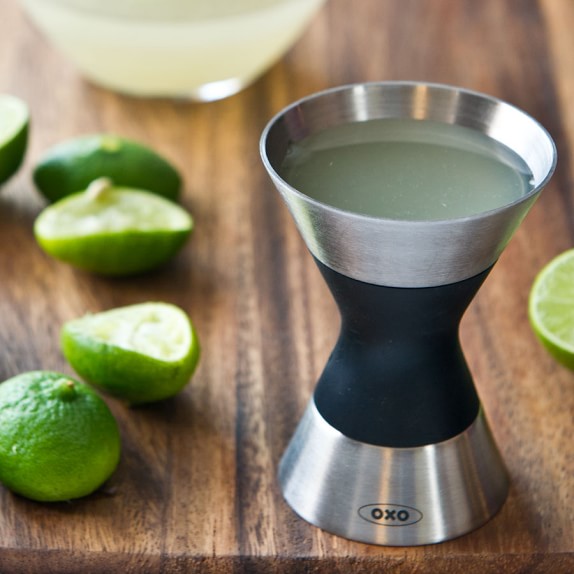
Juicing citrus is fairly simple. If the stem of your fruit is a "pole", cut the fruit in half along the equator. insert the fruit cut side down onto the juicer, be it a hand juicer, press, or mechanical. If there's an interuption you can leave the cut fruit up to 2 hours before juicing.  Apply pressure manually, or through the lever until the juice is extracted down to the pith. Juice into a china cap over a cambro. When juicing to order (a la minute) you can squeeze directly into a jigger for cocktail service. This has some drawbacks though.

I don't recommend juicing anything a la minute. every different piece of produce you juice will have different sugar and acid content. Also depending on the pulp in your juice and how you strain the cocktail, you could be getting wildly different yields. juicing in large batches and straining allows for greater consistency over the course of the shift. Some people like the pageantry of seeing the fresh juice squeezed in front of them but it does lead to less consistency overall.

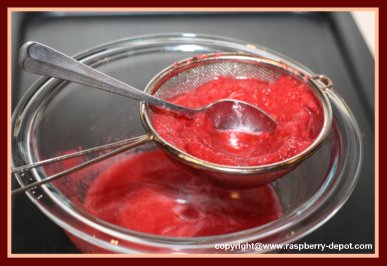
A simple way to juice berries or other soft fruits like kiwis at home is to just muddle them through a mesh strainer over a container. After you've mashed a bit, scrape out the spent pulp from the inside. This keeps the strainer from getting too clogged. The mesh will catch all the skin and seeds and the liquid will flow through. Depending on the density of the mesh you made need to filter the juice more times.

Fresh juice has a fairly narrow window for their ideal flavor. Lemons, limes, and grapefruit are delicious freshly juiced but many people think they get even more flavorful after a few hours of rest and are good up to 2 days (48 hours) later. The shelf life of oranges is a bit less forgiving. Oranges contain substances called lactones, which after juicing, develop into limonin which has a bitter flavor. Fresh is best wish oranges but you can use it up to 4 hours after without much issue.

Myth: Room temperature citrus yields more juice than cold produce.
This theory is odd. People think that the fruit sacks or cells are scrunched together and warming them up will ease the process of juicing. Some people even think that microwaving the fruit will make it possible to extract more juice. Don't do that. Everyone who has tested this has disproven this concept.  The yields are the same regardless. 

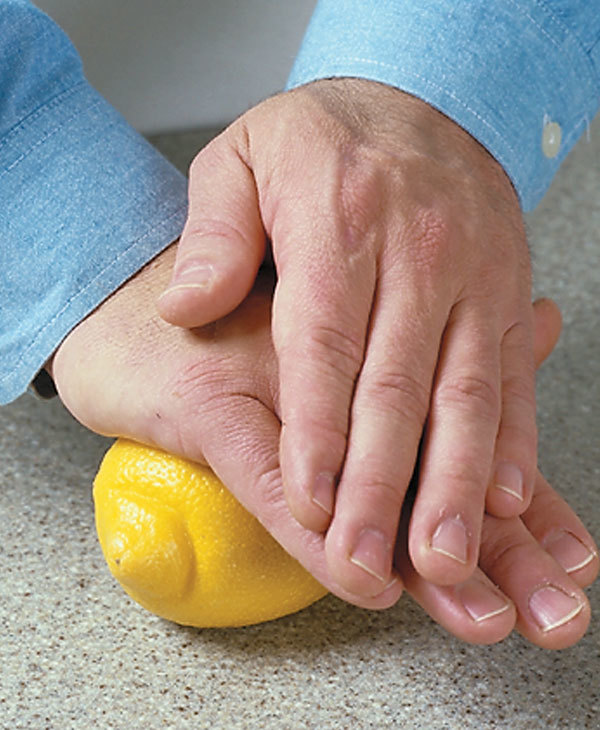
Myth: Rolling the citrus yields more juice.
This is the same silly idea. Even Jamie Oliver thought this works. No, it doesn't. People have tested it. Don't waste your time. A good press juicer extracts all the juice possible, you're not manifesting new juice.

Monday, March 21, 2016

My Bar Battle Station

So I thought I would share this. This is the bar I decided to build for my new home. I started with a desk and built a simple tiered shelving system. That very quickly filled up. I needed to expand so I got a metal wire shelving system. It took a little longer but that did start to fill up. It also lacked a workstation. So I expanded.

I started with this, the Whitmor 6070-5264 Supreme 5-Tier Shelving Unit. Naturally I got it in black. I'm a bartender, it's our color. This did work well for most bottles, but some bottles with small bases might wobble or topple. Shelf liners are recommended. I opted not to use the recommended liners, like this. I opted for simple mesh plastic sheets. I bought mine online, but you can find these kinds of things at your average craft store. They're used in needlepoint. I like them because they clean very easy, are semi-flexible and allow for easy adjustment and good traction. They are also typically a bit more affordable than your branded custom shelving liners, sometimes up to ten times less expensive. This was my start.

I expanded, and it's very easy to do that with this kind of shelving. I got a second 5-Shelf Shelving Unit. This time, I found cheaper one of these. Amazon started their own brand, and it was naturally less expensive. I now had two great shelves, I decided to add a workstation shelving system, a bridge in between the two racks. I thought I'd made the station a little wider. I opted for this. I got two to make it a little more stable and add a space for tools. I am not a big wine buff but I did splurge and get a rack designed for bottles.

Here in lies a problem. Despite having all the same listed dimensions, different brands to have slightly different dimensions. It's no more than a centimeter or two at most but that really does create a big problem when trying to line up the posts with the shelves. I had to put some of the deeper shelves in the middle and the thinner ones on the top and bottom. The system actually bows out slightly in the middle. It does remain stable, though. I'd certainly recommend getting two shelves of the same brand to avoid some of this headache.

Budget wise, the 5-shelf units cost about $80. The three long bridging racks cost $15 each. So, excluding shipping, the whole bar costs a little over $200 to build. Liquor and tools are up to you.


I hate to advocate drugs, alcohol, violence, or insanity to anyone, but they've always worked for me.
- Hunter S. Thompson

Thursday, September 10, 2015

Tequila 201: The other Agave drinks

Pulque
Pulque is known as the drink of the gods, a Mexican Ambrosia, so to speak. This drink dates back about a thousand years. The drink was considered sacred and a privilege reserved for the upper class. Unfortunately, the beer industry spread a lot of stories about pulque and how it had cow excrement in it and pulque started being seen as low-class. Pulque is the fermented sap of the agave plant. Think of what beer is to whiskey. Pulque is that but to tequila and mescal. Pulque is usually made in a number of delicious flavors called curados. It's low proof, usually 3-5%. It's also pretty healthy, almost like a slightly alcoholic smoothie. 

Mezcal
Mezcal or Mescal is actually the original form of tequila. Much like how brandy is the basis for Cognac. All tequila technically is mezcal but produced in the designated regions around tequila Mexico. Tequila is a protected term, enforced by the Mexican government, while mezcal is not. The CRT, Consejo Regulador del Tequila (tequila regulatory council), makes frequent inspections on every aspect of tequila production to allow the producers to sell their product as tequila. Mezcal doesn't have that. Now you might think that this inherently makes tequila a better product but that's not necessarily the case. Tequila has to use at least 

Many modern mezcal producers have actually created products that rival and even dwarf the quality of some tequilas. For a while, the only brand of mezcal I could find was Monte Alban, which was a decent mezcal, but these days you can find all sorts of premium brands, like Wild Shot, Ilegal, and Joven. While tequila can only be made with the Weber Blue Agave, mezcal can be made from any of dozens of agave plants, but most commonly the green agave, or Agave Angustifolia. It is effectively still just distilled Pulque. It's made mainly in Oaxaca and has a stronger smokier flavor than tequila. It also has a worm. Yes, this is where the worm in the bottle comes from. It won't hurt you; drink it once. 

Bacanora
Bacanora at its foundation is just a different genre of Tequila. Bacanora was named after a town where it was popularly produced. Today, it is a protected term ensuring that is only made using the certain agave grown in the select northwestern regions of Mexico, the agave Pacifico or Agave Yaquiana. It is another government-regulated name that ensures that the product is only made to certain standards. In terms of flavor, it's a bit more robust than most tequilas but not quite as harsh and smokey as many mescals. 

Sotol
Sotol is worth mentioning as well. Sotol is another distilled Mexican spirit made and distilled in very much the same vein as mescal and bacanora. It technically doesn't use the agave plant, however. It is made from the Desert Spoon, or Dasylirion Wheeleri, which is a type of evergreen shrub common in northern Mexico and parts of Texas. This plant was originally fermented some 800 years ago. It started being distilled in the 16th century when the Europeans brought over distillation techniques. The production of this spirit is nearly identical to mescal down to the way it's harvested and trimmed. Much like tequila, it is put in three different age classifications: Plata, Reposado, and Anejo. Sotol is generally slightly smokier and more vegetal in flavor than the average tequila. 

Special mention to Raicilla

Photo Credit: Wikimedia, Flickr

Thursday, September 3, 2015

The Shamrock in the Guinness.

I remember the first time I went into a pub and ordered a Guinness. This was a good, proper pub that poured it on nitro, had the glasses, and knew what they were doing with it. I'd had Guinness by the can and bottle before but there's something special about getting a beer on draft. I also remember going into a pub a few years ago and ordering a Guinness and noticed an extra step in its serving, drawing a shamrock in the foam. I thought this was a cute little touch at first, but the more feedback I hear from people whose opinion I respect in such matters, the more I dislike the idea. 

The original piece of negative feedback I heard on the subject was from a character named Super Hans on the David Mitchell show, Peep Show. He said you were effectively drinking an advertisement for a product you're already drinking. I find that argument a bit lacking, but it is a point. I more prefer the argument that it actually diminishes the ritual of the perfect Pint. 

Guinness has a long-standing standard of what it is to perfectly pour their beer. They offer a certification program for bartenders. You're meant to take a clean, dry, clear Guinness branded glass at a 45-degree angle and pull the handle. Once the beer reaches the harp you straighten the glass and stop the tap. Let the beer cascade until it's gasses settle. The continue to fill to give the beer a perfect head. Or as Dara O'Briain explained: "You have to let it sit, let it go black. Then you push it back so that more gas goes into it. 5/12 of an inch is the ideal head around the top. And if somebody paints a shamrock into it, you're allowed to stab them in the eye with a fork." 

As a friend put it once, "Never go into a bar that has a neon shamrock." The Shamrock in the pint seems to be the mark of a place that is Irish for the sake of being a theme restaurant. There's a big difference between your chains and your properly Irish pubs. A pub is simple, it doesn't need frills or flashy lights. It just needs good beer and quaint surroundings to be with friends. I can't stand plastic cups. Karaoke belongs in karaoke bars. Irish Pubs just need beer, proper beer. It's a pub, not a Starbucks. I've said enough quotes this post so I think I'll close on a song that explains what way too many pubs have become: 


Monday, August 31, 2015

Golden Apple Martini

This was actually a discussion I had almost a year ago over the best way to make an appletini. Many bartenders would say 2:1 vodka and sour apple pucker. This drink somehow gained popularity. Lord, if I know how. I suppose it was the simplicity of the drink in combination with the craze of the fancy glass. It's also incredibly easy to make at home if it's a drink you particularly like. All you needed was two bottles. On my opinion, though, the drink is rubbish. Many people have jazzed it up so to speak with sour mix, lemon juice, or citrus vodka. none of which really save the drink, they merely help balance a bit of the sweetness and lessen the proof. I wanted to take my crack at it

1 1/2 oz. Citrus Vodka
3/4 oz. Berentzen Apple Liqueur
1/2 oz. Fresh Lemon Juice
1/2 oz. Rich Honey Syrup

Add all the ingredients to a shaker tin with ice. Shake the drink well and double strain into a chilled cocktail glass. Garnish with a golden delicious apple fan.

This drink was sort of inspired by the various appletini recipes I've seen and blended with a sort of sour and Cosmopolitan recipe. I thought of creating an apple shrub or using a calvados, but I wanted something that would be fairly accessible to the average person, as that was a part of the appeal of the original. I think the flavors carry over well and do give the proper taste of an apple rather than the sour sugar taste you get from most appletini's.

"I'll have an Appletini and the girliest drink in the house"
"Two Appletinis coming right up"
- Scrubs

Sunday, July 26, 2015

My Ideal Meal

This was an interesting thought experiment I posed to myself. What would my ideal meal be if money, materials, and time were no object? My birthday is coming soon at the time of writing this post and I was wondering what I'd like to do for it. A nice hearty dinner has always been a tradition, but if I could have anything, from any restaurant, for any number of courses, along with any drink pairings, what would I want? To be clear, these are all items I've enjoyed individually in the past, though not necessarily together. While these are not all my favorite foods specifically, they are foods that hold some significance or nostalgia to me. I hope you enjoy it. What would you do for your greatest meal ever?

Drink 1: Americano
This is my staple before meal drink. It's light. It opens my palate. It won't compete with other flavors and it's one where I can sip it at any speed I like and on a hot day, it is truly refreshing. This drink was the first drink ever ordered by James Bond in Ian Flemming's novel, Casino Royale. I adore Campari so I knew I'd need that in my first drink as it is an aperitif. For the vermouth, I would prefer Vya, a new, Californian made, line of Vermouth. I might take it with regular soda, but I would prefer it with Perrier. It is worth mentioning that during the entire meal I would like a side of ice water. 

Appetizer: Cheese and Meat Plate
To follow up with the last bits of my cocktail, I would like to consume an array of cured meats and fine cheeses. I know I would require some prosciutto, ideally thin-sliced prosciutto de parma. Some of the meats must be a bit spiced, some properly made pepperoni, salami, or bologna. One of the greatest slices I've eaten recently was actually of duck prosciutto so I'd like a few slices of that, but not too many as it's quite rich. I'd like a bit of Roquefort, sheep's blue cheese, but again not too much. In contrast, I believe that some smoked brie or Pierre Robert would be in order. We may as well throw in some goat's milk cheese as well, some bucheron perhaps. Naturally, there would be a few other compliments such as candied walnuts and spicy stone mustard, along with bread, oil, and jam.

Drink 2 and 3: Sazerac & Fruh Kolsch
As I move from lighter flavors of cheese to some stronger flavors I opted for my ultimate favorite cocktail and a good all day drinking beer. Yes, a bit of double fisting here, but I would be sitting and having water as well. The Sazerac is really a favorite cocktail if I know I have a competent bartender tending to me. It's supposedly the first cocktail truly invented in the United States though there is much dispute over this. The original recipe supposedly called for cognac, and then started being cut with rye, until eventually it just became a rye whiskey cocktail, which is how I like it. I like Dad's Hat Rye with Grande Absente for the rinse. 

Fruh holds a special place in my heart as the first drink I ever had technically legally. Sorry, Herr Goetz but I had a few beers when I was on the school exchange in Germany. It was in violation of the school regulations, but it was worth it. A group of us students went out with the German students to Rhein Park and we drank. We got a case of Fruh and of something else, Spaten or Becks. I'd had plenty of beer before, even wine, and a few liquors. But there was something about that beer that made me feel good. This was the first where I really felt like that there was nothing wrong with it. We didn't have to hide it from anybody. I looked for this beer everywhere when I came to be of age in the United States to no success. It is in no way the best beer I've ever had, but it's a simple true pleasure. One particularly bad day I found myself at a bar and they had Fruh on draft. As I was drinking that beer all the awful things that were happening fell away.

Entree: Surf and Turf with Potatoes and Mac 'n' Cheese
You can never go wrong with two premium pieces of meat. Steak is one of those things that pair well with the heartier cheeses and my new refreshments. One of my favorite meals at my old job was a 9-ounce steak cooking in its own bloody juices topped with a disk of melted soft cheese, I forget which one at this time and a few potato medallions cooked in what I recall being duck fat. Like Uma Thurman in Pulp Fiction, I typically take my steak bloody as hell. To pay homage to the song of a dear friend, I think I'd have a porterhouse. Though I'd take it pan-roasted to medium rare with butter and light seasoning. A really wet steak would not be best paired with my other dishes and sides.

I have a long-standing love of lobster. I remember being a boy and cooking live lobsters with my parents. My cat would fight them and my father would try to recreate the scene from Naked Gun 2 1/2. I remember visiting Cape Cod in the summers as a child and eventually coming to love ripping apart and eating the messy treat. A bit of melted butter to pair with a split lobster tail and two big fat cracked claws is all I could ask for were it to be paired with a steak as well. I imagine a 2-pound lobster would suffice for this.

I debated a long time what side or sides I would want with this main course. Potatoes were what came so naturally, it was almost a cliche. Baked potatoes were never my style. Roast potatoes in duck fat would easily be my ideal, but I always like mashed potatoes too. So I decided to have both. A half dozen or so baby potatoes split and fried to give them a nice crisp snap. Naturally, a little salt and pepper, possibly rosemary.

The mashed potatoes would require some mix-ins. A bit of garlic and cheddar cheese should suffice, but butter, cream, and other light flavors would be welcome. A nice creamy feeling to wash the palate. I don't care for them overly lumpy or fluffy. a nice creamy texture is what makes it my comfort food. I thought of incorporating bacon to the potatoes, but I thought that better suited to some pasta, or better yet, some Mac 'n' Cheese.

I firmly believe that the best macaroni and cheese is baked with bread crumbs on top, forming a crust. Bacon pieces should be incorporated, not bacon bits, pan-cooked bacon sliced to about 3/4". Also, nice long noodles please, while elbows and shells promote nostalgic thoughts of mom making Kraft or Velveeta, I believe, in this case, comfort food serves the function of providing the comfort. Oddly enough the cheese sauce blend isn't a real concern for me in this dish though I would like it not to be over watery, and preferably to have a little spice to it, a little warmth.

Drink 4: Patron Burdeos
I thought a very long time about what my after-dinner drink should be. Ideally, my previous two would hold through my main course spread. I thought of whiskey, port, amaro, or even a boozy milkshake kind of drink. While whiskey was my style, I thought it better suited to leave that to pair with the steak and not to be with dessert. Then I thought of brandy. No, that wouldn't be for me. While I like it, I knew there was something better. Then it hit me, the most wonderful drink I was privileged enough to taste as a gift when I did my first cocktail showcase. Patron Burdeos had the taste of fruit and wine from it's wonderful aging in the Bordeaux wine barrels. When you mix that with the proof of a good tequila you get a drink a is is better than cognac at being brandy. A snifter of this neat would be fitting for the last drink of the evening.

Dessert: Lava Cake, Ice Cream, Berries 
I needed some chocolate for dessert, but also a little more creaminess other than just cheese and butter. Lava cake is a great go-to dessert because it's never bad, but when it's good, it's tremendous. If the cake has a good crunch to the shell that almost cracks allowing the hot lava to flow out, then you have yourself an amazing cake. You naturally need some cold to go with that. So some vanilla ice cream, you can't beat a cliche sometimes. A few chilled strawberries, and maybe a few raspberries

I thought of doing a whole spread of every kind of food imaginable, but I knew much of it wouldn't pair together. So I opted for the most luxurious cohesive spread I could. A meal that would remain uncluttered was a necessity. I wouldn't want a volcano sushi roll with some barbeque pulled pork and creme brulee. It just would mesh right on any level, though all of those things are amazing on their own.

I thought I'd price this were I to order it at a restaurant assuming average markup and prices. I'd actually estimate this at a little over $200, maybe $240. A good chunk of that comes from just the Burdeos. Were I to make this on my own, excluding cooking costs, it may only cost about $65 if I shopped the deals available to me. Of course, that is by the ounce for cocktails and may be considerably higher than that if you factor in the cost of whole bottles and containers. But I think this meal would be worth that. In practicality, I might switch the Burdeos for something more practical, but this thought experiment was for the ideal meal.

"The meal isn't over when I'm full. The meal is over when I hate myself"
- Louis C.K.

Photo Credit: Flickr, Wikimedia, Pixabay

Wednesday, May 27, 2015

Syrups

Syrups are one of the quintessential components for any knowledgeable bartender. They are what give a drink its sugar, it's sweetness. They are what making drinking fun, and not like drinking medicine. There are many great sugars in the world at a bartender's disposal and I'm going to touch on the most common and most versatile of these syrups. Coming soon I will be doing a post on making some more advanced syrups and I hope you take those techniques and create something truly that is your own.

Simple Syrup
Simple syrup is the easiest and most common sweetener in cocktails today. Is very quite simply, sugar and water. The most common type found in America is equal parts sugar and water by volume, put over some heat to remove any impurities. This is commonly referred to as 1:1 simple syrup. Across the pond, they use a ratio of 2:1. This is called rich simple syrup by many. The added sugar acts as a preservative which helps the shelf life of the syrup before it goes off and starts accumulating mold. The reason we use syrups instead of accurately measuring granulated sugar is because sugar dissolves very slowly in cold environments like cocktails. No one wants a muddy puddle of raw sugar at the bottom of their drink. Simple syrups are typically made with plain white sugar, but they can also be made with brown sugar which is comprised of 3.5-6.5% molasses. Many bartenders have opted to use Demerara sugar, or Sugar in the Raw, made from crystallized sugar cane juice, which brings some notes or caramel and molasses. 

Honey Syrup
For the record, a honey syrup is not the same as honey. Raw honey right from the bottle is far too dense to be incorporated in a cocktail. Even a hot toddy might not dissolve all of it. Again, we simply mix our raw honey equal parts with water, ideally with heat to remove impurities and help the shelf life. When you pick out a bottle of honey from the store try to make sure you invest in quality honey, not one from a little plastic bear. Pure honey can have citrus notes or even taste grainy. different styles like sage honey can be quite delicate while avocado honey is richer, almost buttery. I'm not saying you need eight different honey syrups, but be aware of how different kinds of honey can compliment different cocktails. 

Maple Syrup
Maple syrup can be a very fun syrup to use in whiskey cocktails. Again we need to dilute it to make it functional for cocktails. It is made in the same style as honey syrup. Take maple syrup and add it to hot water in equal parts. Again, the stuff in the plastic log cabin isn't that great quality. Premium maple syrup is incredibly easy to find at your average farmers market and you can probably find some quality syrups at the supermarket, but it might take some experimentation and research to find the best quality. Some people think that Canadian or Vermont maple syrup is the best. This isn't necessarily true, it's just that climates with greatly changing seasons yield more sap as the seasons change. These regions thus produce more and get a name for being producers. I made maple syrup in my house with my father in Massachusetts since I was old enough to carry a bucket. and it tasted great. As a kid, I liked the plastic bottle of Log Cabin, but when I grew older I enjoyed the richer woodier flavor, especially with some whiskey. Dad's Hat has actually started aging maple syrup in their old whiskey barrels.

Agave Nectar
Agave nectar is actually the concentrated compound from which tequila and mezcal (mescal) is fermented and distilled. Most agave nectar comes from the blue agave, the agave used in all tequila production, but it can come from other species as well. Agave nectar, like honey and maple syrup, contains fructose, not the sucrose found in granulated sugar. Nutritionally they behave the exact same way. They are just broken down differently in the liver. Agave nectar is arguably the sweetest syrup you will find common behind the bar. Agave nectar can come in two varieties, light and dark. Light is fairly flavor neutral while the darker varieties can pick up flavors of caramel, and even some fruity pineapple notes. As always the plastic bottles you find in the average supermarket are very close to high fructose corn syrup but you can find less processed nectars if you look hard enough.

"Health - what my friends are always drinking to before they fall down."
- Phyllis Diller

Photo Credit: Pixy, pikrepo

Tuesday, April 21, 2015

Brandy 101: What is it?

The word brandy is derived from the Dutch word brandewijn, meaning burnt wine. The vast majority of brandy is made by distilling some form of wine. Through distillation, the water in wine is separated from the alcohol. This creates a much stronger drink than regular wine. Most brandy is aged in wood casks, typically oak, for several years. This turns the clear distillate into a fine brown amber color, just like whiskey.

It's worth mentioning that not all brandy is made solely from grapes. There are plum brandies, pear and apple brandies, peach brandy, prune brandy, and even brandy made from other fruits like the juniper berry. You may have seen things like blackberry or ginger-flavored brandy as well. Typically these are not actually distilled from blackberry or ginger. They take a fairly standard brandy and infuse it with blackberries or just blend it with a liqueur. They are still fine products but often have a great deal more sugar than standard brandies.

Pomace brandy is an interesting regional trend. With pomace brandy it is not just the wine that is used to make the brandy, it is the whole grape. A great deal of pomace brandy actually uses substantially less grape juice. Many cultures will juice the grapes to make wine and then take the residual grape pulp and use that to make their brandy. The pulp still contains enough sugar to yield some alcohol. The brandy that comes from the pulp might not yield the same flavors as the wine but different doesn't mean worse. The skin of the grape does bare flavor just as the juice does. Italian grappa is quite flavorful. It is unaged and it carries a great dry wine aroma without feeling burnt. 

Certain regions have opted to call their style of brandy by a different name. Grape brandy from the Cognac region of France is designated as cognac provided it complies with the regulations of the region. The same is true for Armagnac. There is an Appellation d' Origine contrôlée, which legally declares that nothing can be sold as cognac unless it complies with the standards of the land. It acts almost like a patent or copyright protecting the name of the spirit.

If you've ever bought brandy you probably notice that brands often offer a line of products or various grades. The letters, VS, VSOP, and XO are very common in brandy, cognac, Armagnac, and even some rum and other liquors. VS stands for Very Special. VSOP stands for Very Superior Old and Pale, and XO stands for Extra Old. In order, they reflect how long the brandy is aged, from 2 years to 4 years, to 6 years. As something is aged it takes on more flavors and complexities from the wood. Some Brandies have been aged upwards of 50 years. It does take work to age liquor and prices do go up the higher the grade of brandy. Try it all. Find your sweet spot. 

"An American monkey, after getting drunk on brandy, would never touch it again, and thus is much wiser than most men."
- Charles Darwin

Photo Credit: Needpix, wikimedia

Thursday, April 16, 2015

Tobacco and drinking

I'm going to open with a quote this time: "To be honest, after years of smoking & drinking, you do sometimes look at yourself & think... in between the first cigarette with coffee in the morning to that 400th glass of corner-shop piss at 3am, you do sometimes look at yourself & think: 'This is fantastic, I'm in heaven.'" A truly wonderful quote by Dylan Moran in Black Books. Guilty pleasures are what makes us so interesting. Hedonism, consciously unconscious self-destruction, cognitive dissonance, a glorious blend of yummy yummy and boo hoo, that's what smoking is. That's what drinking is. And it's so much better when they're combined together. Why is it that the things that feel best in the world always have those little strings attached.

Drinking and smoking have been entwined into our culture for a long time. From the upper-class ladies sipping a martini and smoking a long cigarette, to a tired politician smoking a cigar with a glass of whiskey or brandy. I'm sure a Budweiser can has been used as an ashtray many a time. It occurred almost simultaneously that we discovered that smoking was bad for us and that alcoholism was declared a disease, despite their massively extensive history. What is it about a slow release of poison into our system that is so fantastic?

Tobacco and drink have gone together a long time, so much so that many cigars are ever aged on old liquor barrels. I'm smoked a number of whiskey, rum, and brandy cigars, where the tobacco leaves are aged in the old wood. They take on the smell and some of the flavors on the spirit.

Tobacco liqueur does exist as well. It's a fairly new product. It takes fresh tobacco from Louisiana along the Missippi. It carries a great oily nature from the fresh tobacco leaves. Dried smoking tobacco has a much different nature than fresh of course. It was actually featured on Travel Channels Booze Traveler.

The cigar bar is an ancient institution. While they really only became truly popular as cigar bars in the nineties after the smoking bans. Before the bans, everyone smoked in bars. Some bars might've had no-smoking areas but it was just how it was done, going back to gentleman's clubs and hunting lodges and the like. Hookah bars have also started popping up in cities and small towns across the country. They take a good deal of their theme from Middle Eastern and Asian bars and cafes, though some are blending more into the gentleman's club vibe. Human beings seem to need an activity to occupy them while having meaningful conversations. They smoke, have a drink, or play a game of chess. Smoking and drinking in theory are individual actions but they bring about a great sense of community. I got one of my first jobs by having a conversation with a manager over a cigarette while he was on break. These days especially, smoking has become a community.

Aside from the glorious smokey flavor that ties tobacco with so many spirits and the great sense of community granted by both indulgences I really don't know what makes them so great together. But they are. 

"I know a man who gave up smoking, drinking, sex, and rich food. He was healthy right up to the day he killed himself."
- Johnny Carson

Photo Credit: Needpix, pikist

Tuesday, February 17, 2015

Glassware: Beer Glasses

This is part of my series I'll be doing on different glassware and their functionality. Not only do different glasses naturally have their unique visual appeal but it's important that people know why these glasses have their shape so when people start creating their own drinks and cocktails they know the best vessel to keep the integrity of the drink intact or at least can understand how the drink might change due to the nature of the glass. 

Mug 6-35oz.

Steins, tankards, and mugs are the staple of all-day beer drinking. In German beer gardens and beer halls, a handled mug is a tradition. They hold a large amount of liquid and are great for walking around with. Beer vessels are traditionally made of glass, many mugs are ceramic. Stein translated roughly means stone. Traditional German steins are often made from pewter, porcelain, or even silver. Steins feature a pewter lid to keep insects out with a thumb handle for one-handed opening and drinking. Adding a handle or stem to a glass also allows the drink to remain colder as your body heat is not in as direct contact with the liquid. Most mugs and steins are adorned with decorations such as family crests and humorous slogans or images. Mugs are typically used with lighter beers like golden colored Oktoberfest beers.

Stange 6.5-10oz.
The stange or stangen glass is what some people call the purest beer glass. They are tall straight cylinders. This means that they more or less have the least influence on a beer's state. There are no engravings or curves to affect the smell or taste. They are used to bring out the flavors of the most delicate beers. It's said to amplify the malt and hops flavors. Many people will simply substitute this for a collins glass.

Pint Glass 16oz.

The conical pint glass is probably the most common type of glass found behind a bar, except for maybe wine glasses in some bars. These glasses are simple and multipurpose. These are also the type of glasses that fit best in a Boston shaker. They are often called mixing glasses. For this reason, the dimensions are very standardized. There's really nothing special about these glasses that best match any particular style of beer, but they certainly aren't the worst option for any style. Typically heavier beers don't receive the 16oz. portion size though. 

English Pub Glass (Nonic) 20oz.
These glasses are naturally a bit more popular in European-style bars and with European style beers. These glasses have slightly thinner glass than mixing glasses. They also feature a slight bulge an inch or two below the rim. This minor bulge does not affect the beer in any real discernible way. The main function is to make the glasses easily stackable even when slightly wet. Mixing glasses tend to suction and stick to each other when stacked. The bulge also helps the drinker grip the glass. Supposedly it also reduced the chances of the glass chipping around the rim. Again these glasses can be used for pretty much any style of beer.

Wheat Beer Glass (Weizen) 16-23oz.

Wheat beers tend to produce a lot of head, even when poured professionally. These glasses were designed to help with heady beer. Bubbles always start at the bottom of a glass. Head of course forms at the top of the glass. By creating a smaller bottom and wider mouth, it limits the height of the head. The rim bows inward to help trap the head making it nice and dense. The small base is necessary for bars so you don't have to keep stopping and starting your pour waiting for the head to settle. It also means that the beer will stay carbonated longer.

Pilsner Glass 10-23oz.
Weizen glasses and Pilsner glasses are often confused due to their very similar style and size. Pilsner glasses are often a bit more straight-edged in shape rather than curved. They also don't bow inward at the rim. This is to let the aroma out. Wheat beers tend to already have a potent smell. Pilsners are a bit more subtle and the outward flare helps the nose. Many smaller pilsner glasses have a foot to them, rather than a wider bottom. This is to again reduce the amount of head but maintain the balance of the glass.

Porter / Stout Glass / Goblet / Chalice 12-15oz.
These are typically smaller sizes than the traditional 16oz pour. This is because they tend to feature darker colored beer, which is often higher in proof and flavor. The elevated bowl creates a lovely visual presentation for observing the rich colors. They bow inward to create that dense creamy head. Many home drinkers will opt to use a brandy snifter in place of a dedicated goblet.

Tulip / Thistle Glass 13-18oz.
These are sort of the reverse of the Weizen glasses. Thistle glasses pinch in a bit lower on the glass. They resemble Scotland's national flower and are thus used for scotch type ales. The pinch helps concentrate the aroma and the flared rim allows for a concentrated head. The stem also helps to keep the beer colder. They are very good all-purpose glasses for almost any craft beer. Tulip glasses are used predominantly for Belgian style beers.  

Ein Zwei Drei Vier. Lift your stein and drink your beer. 

Photo Credit: Pikist, pikrepo, pxfuel, Wikimedia, needpix

Monday, January 26, 2015

Colima Sour

This was this years submission for the Patron Aficionados Tour. I was fortunate enough to be able to participate in last year's exhibition in Atlantic City. This year the event comes to my neighborhood of Philadelphia. Technically this is an exhibition, not a competition but there's a prize at stake so what's the difference? Well, I'll tell you. It's a lot less stressful and thus, a lot more fun. Everyone naturally comes together, especially when you're already good friends. We drink with each other and enjoy the ride. 

1.5 oz Patron Anejo
.25 oz Patron Citronage
.75 oz Pineapple Juice
.5 oz Fresh Lemon juice
.5 oz Serrano Pepper Infused Agave Nectar
Red wine Float (a nice Spanish grenache, I use Las Rocas, El Renegado)

To make the infused nectar, simply pour about a cup of water and agave nectar into a saucepan and add a serrano pepper with as many seeds removed as possible. let simmer until the desired taste and consistency is reached. Add a few berries like strawberries for a fun twist.

Add all the ingredients except the red wine to a mixing tin with ice. Shake vigorously and strain into a rocks glass with ice. Carefully float some red wine on top of the cocktail until the glass is full.

The inspiration for this cocktail came from the New York Sour, which is effectively a whiskey sour with a red wine float. I decided to bring back my spicy agave nectar I used in my cocktail last year, the Old Timey Honky Tonky. I adore the spice and I've been using it constantly in cocktails and cooking. 

The name Colima sour is a reference to the fact that it is a sour and to the volcano, Colima. No, not kalima. In addition to being the name of one of the 32 states of Mexico, Colima is one of the most active volcanoes in Mexico and even in North America. It sits partly in the state of Colima, but mainly in the state of Jalisco, where Patron is made. I thought the name fit rather perfectly with my cocktail. Not only is Colima a state like New York, the volcano angle works too. There's a nice hot spice to the drink and the lovely red float on top might suggest the lava angle.

Fingers crossed for this year. Updates to come.

Tuesday, December 16, 2014

Speed over Quality?

I recently started tending bar at a new location, a fairly casual restaurant. I was in training so they put me on the service bar. A ticket came in for a Manhattan and we were a bit slow so I naturally took the time to pull out my bar spoon and give it a proper stir. My other, senior,  bartender said, "I can't remember the last time I did that." This sparked a rousing conversation as to, WHY THE HELL NOT? He was used to busier shifts and had grown used to taking the shortcut of simply swirling such drinks. Now I've worked in such bars where these shortcuts are commonplace, but when I have time I've always done things with as much care as possible. I see this more and more these days, I believe it's a phenomenon primarily experienced in America. The fast-paced, fast food lifestyle has lent itself to drink. 

Many bartenders can probably cite Sweet and Sour mix to be the symbol of this phenomenon. Sour mix started as a shortcut some bars would use to save time when batching cocktails in high volume. simply juicing lemons and limes in bulk at the beginning of a shift with some sugar worked as an all-purpose ingredient for countless drinks. Shortly after, store brand sour mix emerged, possibly to make bartending more accessible to the home hobbyist. What's fact is that it started getting used in bars. A blend of artificial sweeteners and dyes and chemical concentrates actually replaced what's fresh that we had right in front of us. It's cheap, doesn't spoil, saves time, and takes less training. 

Now the nightlife thing has caught on in such a big way people have forgotten what things actually taste like. We've become so used to the speedy sugary convenience that we forgot what something of craft tastes like. While bars have always been a home to social interaction, they were also where a bartender was respected. These days people would be fine getting a drink from a robotic gun shooting it into a glass. I doubt anyone a century ago ever imagined someone would order a can of macro beer in a restaurant. The original Irish pub was meant to be a second home. You were to feel as though you were a guest in someone's living room. Perhaps we've come full circle to that and actually started drinking the same swill we get at home for five times the cost just to feel social.

I will yield I got my start in bars and even a bartending school that stressed speed rather than knowledge and technique. I learned that speed comes with practice. Practice the sloppy and rudimentary and you'll quickly become a decent bartender at a sloppy boring bar. Practice style and grace, learn the meaning behind the technique, and soon enough you'll be a great bartender in any bar.

I would apologize for being preachy, but I never met a preacher who apologized for it.

"Associate with men of good quality if you esteem your own reputation; for it is better to be alone than in bad company."
- George Washington

Photo credit: pikist