Showing posts with label glassware. Show all posts

Sunday, November 10, 2019

Gin 402: Dissecting a Cocktail: 101 ways to Martini

Someone walks into your bar and asks for a martini. What do you make them? The following are 12 examples of the classic drink. this showcase should run the gamut of what this drink can be. There are a couple variables that aren't directly measured like how many olives do you want in your dirty martini but pish. P.s. Please don't drink all of these in one sitting. It's actually a lot of fun to batch them all up and do 6 1/2 ounce pours of them to really learn your own palette and tastes.

50/50 Martini
1.5oz. Plymouth Gin, 1.5oz. Dolin Dry Vermouth, 1 dash Orange Bitters, Garnish: Lemon Twist
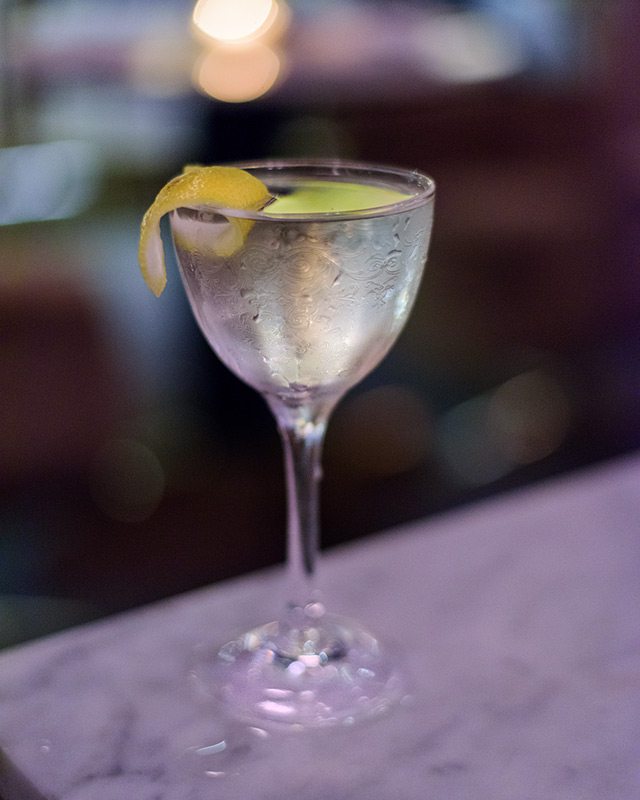
Add these ingredients to a mixing glass. Stir until well chilled (about 30 seconds). Strain into a chilled cocktail coupe and garnish with a twist of lemon.
This cocktail is actually much closer to the historical Martini recipe than any other drink on this list. The others are substantially more alcohol forward, which became a bit of a trend in the 60s, nearly a century after its likely invention. This recipe showcases how vermouth can add beautiful delicate flavors to the cocktail and let you enjoy yourself without getting too plastered. Finding a balanced ratio between the two main ingredients is truly a matter of personal preference. Some people go classic with a 2:1 ratio of gin:vermouth. Others like 5:1, 8:1, or even 1:2, with more vermouth than gin. Nothing is set in stone.

Churchill Martini
2.5oz. Beefeater London Dry Gin, Garnish: Olive
Stir gin with ice while glancing at an unopened bottle of dry vermouth. Olive garnish
This was indeed how the legendary British Prime Minister ordered his cocktail. He kept it purely British, no French or Italian spirits tainting his gin. Boozy for sure. Fun fact: also how Eggsy took his Martini in the film Kingsman: The Secret Service. A simple riff on this recipe is the In-and-Out Martini. No, not the west coast burger joint. Simply rinse a chilled martini glass with around a quarter ounce of vermouth, coating the glass. Then dump it out. Strain in your chilled gin (or vodka), and bang, gin with essence of vermouth.

Vodka Martini, Shaken not Stirred
2.5oz. Vodka (I recommend Ketel One), 0.5oz. Martini Dry Vermouth, Garnish: Olive
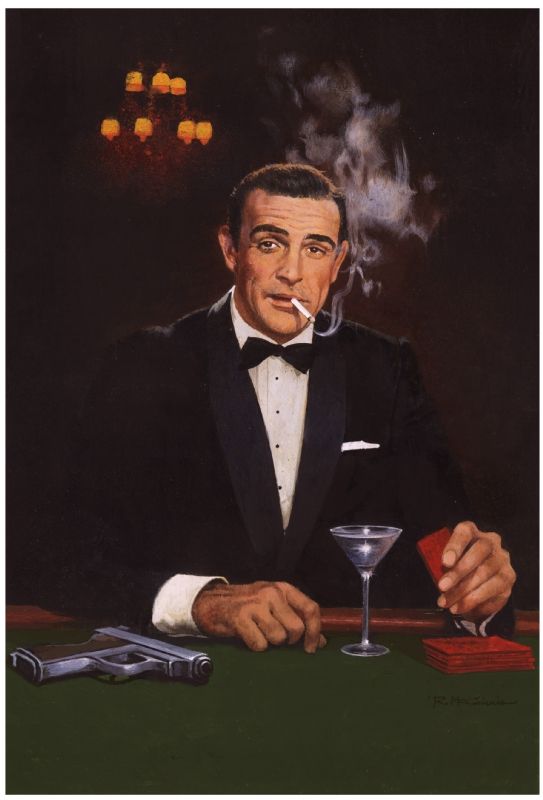
Add your ingredient to a three-piece shaker with ice. shake until chilled (8-10 seconds). strain into a chilled martini glass. Garnish with an olive on a pick. 
Yes, we're going the James Bond route. Well, rather the Sean Connery route. There's some debate as to how this drink became so popular. This was how bond ordered it in the 6th book "Doctor No", which was the first Sean Connery film. But Bond had invented and drank countless other drinks throughout the many books. I'm sure someone has counted them. This drink is unnecessarily watered down and likely has air bubbles and ice shards floating around in it. Perhaps the weaker drink allowed Bond to retain his composure for longer while on the job. This texture is desirable to some but rather uncommon in spirit-forward drinks which could be stirred allowing for a silky clean feel. Some people think that it does make it colder and easier to drink quickly. Up to you, my father likes them.

Diamond Martini
2.5oz. Vodka (I recommend Ardent Union), 1 dash Martini Dry Vermouth, Garnish: Lemon Twist
Batch up these ingredients together. Store them in the freezer until it's as cold as possible. Pour into a chilled martini glass when ready. Garnish with a lemon twist. 
This is the exact opposite of the last Martini. It's all booze, chilled down cold as possible and served with no dilution. It feels like booze. Dilution is a crucial component of every cocktail. Eliminating the water that naturally mixes with the drink creates an imbalance. Feel free to use a 100 proof vodka to really drill the extremes of this example. Or just stick a bottle of Everclear in the freezer. Some people genuinely do just like drinking cold vodka without dilution or mixer, but I find that is a fairly regional preference.

Dirty Martini
2.5oz. gin, 0.5oz. Dry Vermouth, 0.5oz. Spanish Olive Brine, Garnish: Bleu Cheese Stuffed Olive
Add these ingredients to a mixing glass. Stir until well chilled (about 30 seconds). Strain into a chilled cocktail coupe and garnish with a bleu cheese olive on a pick.
There is a lot of debate about when people started garnishing the martini with olives rather than a twist. According to a story on NPR, a Syrian bar owner in Paris wanted to show off the fruit of his homeland and started sticking them in drinks and it caught on. the added salt and vinegar which was used to store and preserve the fruit created an amazing depth to the otherwise fairly light flavor. I prefer bleu cheese olives personally but it's common to find olives stuffed with garlic, pimento, or other peppers to add some different spice character to the drink. Some people will also use olive juice in place of brine, or even run olives through a centrifuge to extract the essential oils (please make sure these are food safe before purchasing/ingesting).

Perfect
2oz. Tanqueray Gin, 0.5oz. Noilly Prat Dry, 0.5oz. Noilly Prat Sweet, Garnish: Lemon Twist
Add these ingredients to a mixing glass. Stir until well chilled (about 30 seconds). Strain into a chilled cocktail coupe and garnish with a twist of lemon.
This is a sort of step in between the Martini and the Martinez. The drink calls for sweet and dry vermouth. It injects a lot more fruit character into the drink. I don't like an overly complicated and botanical gin for this drink. Tanqueray is famous for having only 4 botanicals which make it less likely to have a clash with any of the ingredients in the vermouth you're using. Feel free to mix and match your ingredients for this one, and all of the other cocktails as well. 

This should have given you a full understanding of what the martini can be in every respect. No two people like their martini's the exact same way. Though obviously, not everyone has had a martini every way you can possibly make it. At least none who have survived. A martini is a very personal thing. Have a conversation with your guest. What spirit? What brand? If they want any vermouth, and how much? What garnish? Ordering a martini means you have to talk to your bartender, eventually they will learn your tastes and make it your way every time. Even then, it's still fun to try new ingredients and ratios to see how your tastes change over time. I would never make the martini I make for myself at home for a random guest at a bar. Who knows? Maybe one of you can make me a drink even better than how I make them for myself. Two people have done it for me so far and it made my life all the better. 

Thursday, October 17, 2019

Rims and Rimming

Adding a rim to a cocktail adds a whole new dimension to flavor and texture to your cocktails. a good cocktail rim allows a cocktail to taste a little bit different with every sip and allows the guest a more interactive experience with their drink.

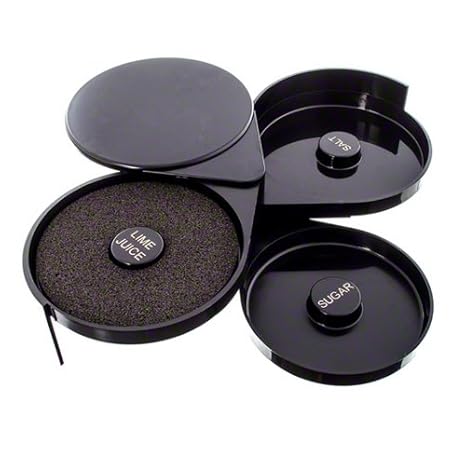
A lot of bartenders I see use a simple commercial rimmer for the sake of speed. Please don't use one of those hinged three-tiered monstrosities. The sponge they utilize to moisten the rim of the glass is rarely cleaned often enough and accumulates all kinds of bacterial growth. Also, this wets the inside of the glass as well as the outside. this is then dunked into sugar or salt which almost immediately gets mixed into the drink. and an extra half teaspoon of salt immediately being mixed into any cocktail will throw off the balance. A cool example of when you actually should have a rim on the inside is the Spanish Coffee where the sugar on the inside is actually burnt and turned into caramel which mixed into the hot cocktail.

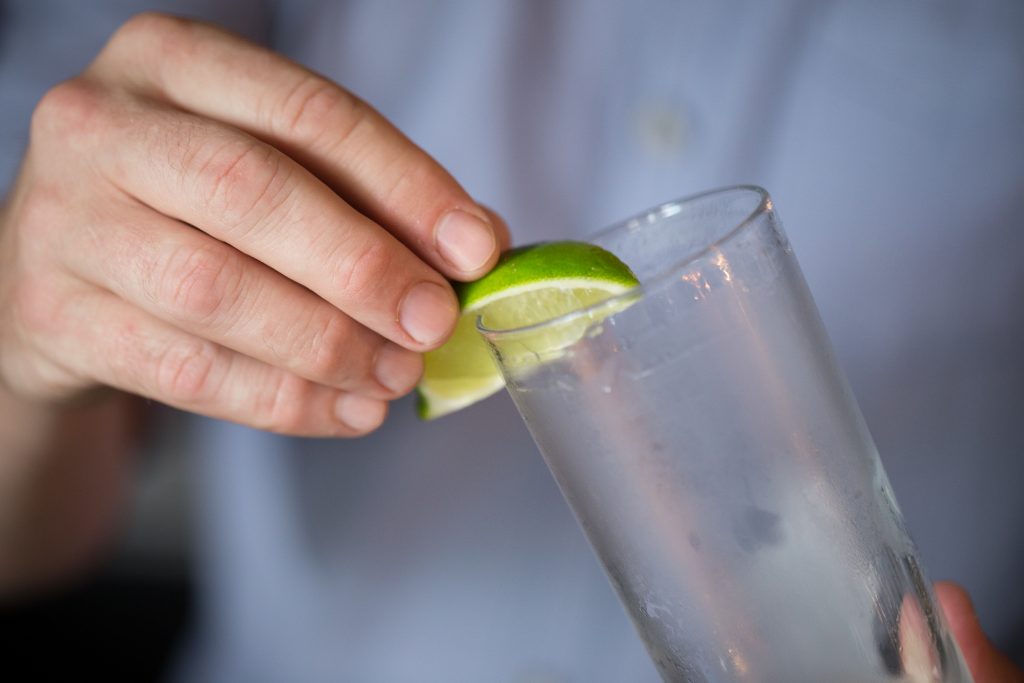
It is typically far more preferable to moisten the outside of the glass with a citrus wedge. Typically whatever citrus is used in the cocktail makes the most sense, but it's not a hard rule. A beautiful rim of salt around a margarita with a lime wedge is classic. I often use an atomizer to wet the glass. A mister filled with honey syrup was used in a few cocktails I've menued over the years. You also don't have to wet the entire rim. you can do just half or just a little decorative strip.

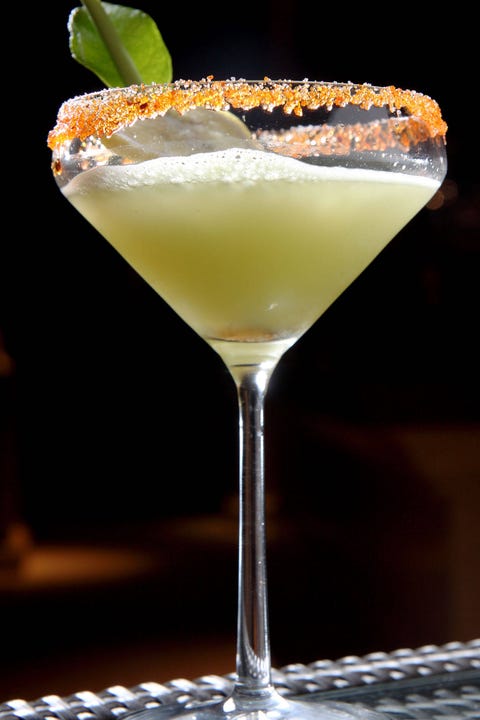
Fill a bowl or dish with your powdered rim of choice. Always add more than you think you'll need to guarantee a consistent coating overall.  Dunk your moistened glass into the bowl and give it a little twist in the powder. Pull out the glass and give it a little tap to break off any heavier clumps. Fill with your cocktail and you're good to go. 

It's also not unheard of to coat the rim of your glass with melted chocolate and allow it to cool into a tasty band. a lot of dessert drinks utilize chocolate. I've seen smores cocktails rimmed with chocolate syrup and crushed graham cracker dust. I've seen gold dust, gingersnap cookies, bacon salt with old bay seasoning for a Bloody Mary, and more.

Aside from the classic sugar and salt, some of my favorite rims are:

Spicy cinnamon sugar:
12 parts Sugar: 2 parts Ground Cinnamon: 1 part Cayenne Powder. Mix around in a bowl and you're good.

Smoked Citrus Sugar:
1 part bruleed citrus peels (finely minced), 2 parts sugar. Take any assortment of citrus fruits and peel them. Take a brulee torch to the peels until they dry and start to curl. Chop up the peels into a fine mince, and add your sugar. Muddle this around a bit to get out all the oil you can.

Garam Masala Sugar:
4 parts Sugar: 1 part Garam Masala (mix of cumin, coriander, cardamom, black pepper, cinnamon, cloves, nutmeg).

Green tea cocktail rim:
Matcha green tea, sugar, citric acid powder.

"You have no idea how hard it was to not make sex jokes in this post."
- Me

Thursday, September 3, 2015

The Shamrock in the Guinness.

I remember the first time I went into a pub and ordered a Guinness. This was a good, proper pub that poured it on nitro, had the glasses, and knew what they were doing with it. I'd had Guinness by the can and bottle before but there's something special about getting a beer on draft. I also remember going into a pub a few years ago and ordering a Guinness and noticed an extra step in its serving, drawing a shamrock in the foam. I thought this was a cute little touch at first, but the more feedback I hear from people whose opinion I respect in such matters, the more I dislike the idea. 

The original piece of negative feedback I heard on the subject was from a character named Super Hans on the David Mitchell show, Peep Show. He said you were effectively drinking an advertisement for a product you're already drinking. I find that argument a bit lacking, but it is a point. I more prefer the argument that it actually diminishes the ritual of the perfect Pint. 

Guinness has a long-standing standard of what it is to perfectly pour their beer. They offer a certification program for bartenders. You're meant to take a clean, dry, clear Guinness branded glass at a 45-degree angle and pull the handle. Once the beer reaches the harp you straighten the glass and stop the tap. Let the beer cascade until it's gasses settle. The continue to fill to give the beer a perfect head. Or as Dara O'Briain explained: "You have to let it sit, let it go black. Then you push it back so that more gas goes into it. 5/12 of an inch is the ideal head around the top. And if somebody paints a shamrock into it, you're allowed to stab them in the eye with a fork." 

As a friend put it once, "Never go into a bar that has a neon shamrock." The Shamrock in the pint seems to be the mark of a place that is Irish for the sake of being a theme restaurant. There's a big difference between your chains and your properly Irish pubs. A pub is simple, it doesn't need frills or flashy lights. It just needs good beer and quaint surroundings to be with friends. I can't stand plastic cups. Karaoke belongs in karaoke bars. Irish Pubs just need beer, proper beer. It's a pub, not a Starbucks. I've said enough quotes this post so I think I'll close on a song that explains what way too many pubs have become: 


Wednesday, July 15, 2015

Wine Keys and Openers

Pull Corkscrew
This is the oldest style of wine bottle opener around. The style of it makes it look like it was some type of woodworking equipment. In short, you press the point in, screw the handle until it is deep enough. Grip the handle firmly and yank the cork out. The original design is of course very risky to use as it requires a very firm grip on the neck and shoulder of the bottle to be able to physically yank the cork out. These are the kind of screw you find Many times when an amateur tries to use this type of corkscrew they will drop the bottle and make all kinds of mess, especially if it's a bottle of white wine that's been chilled and has condensation on it. Some modifications were made over the years. Springs and levers and more form-fitting grips have helped, but they still tended to rely on physical strength to yank the cork out

Waiter's Wine Key
Give me a lever and a fulcrum and I can move the earth. Just about anyone who has worked in the service industry has used one of these at some point. They start as a sort of swiss army knife of handy bits. There's a blade for removing the foil around the cork. There is, of course, the metal helix on a hinge that screws in. What gives this little tool the nickname Waiter's Friend is not just the portability of the tool, it's that little extra piece of hinged metal which just makes the job so much easier. Once the metal helix is screwed in, you tilt the handle and bend down that metal plate so it presses against the top of the rim of the bottle. Carefully holding all parts in place, raise the open side of the handle levering out the cork. It takes so little effort compared to trying to pull it straight out.  It does take a little getting used to. You need to figure out just how deep to screw it in so that when you pull, the entire cork comes out. Some newer keys have a two-tiered metal plate. This allows the key to pull the cork part way out, and then finish the job with the whole length of the plate. 

Butterfly / Wing Corkscrew
These are the most common wine openers I find in your average home. This is a very novel modification to the standard cork pull. they simply took the standard corkscrew that had a brace on it and added some levers attached to gears so that it pries itself out rather than having to be yanked out. It maximizes efficiency and cuts the amount of force needed in half. simply position the screw at the top of the cork and twist the knob. If you have a firm grip on the base of the corkscrew and the bottle then it should screw in with very little resistance. As you screw the winged levers will raise. When you reach a sufficient depth firmly grasp the levers and press down. the cork will be forced out without much strain. Often times the twisting knob serves a second function of a beer bottle opener.

Rabbit Opener
This is a sexy piece of bar equipment. The advantage of this model is that it twists itself into the cork as you raise the handle. So all you have to do is grip the two ears, lift the lever up, and then pull it back down. When this works, they seem like the smoothest bottle opener I've ever worked with. But these are far more form over function I find. They are sexy and can impress your house guests, but sometimes they just don't work. The worm will slide in but then slide ride out without pulling the cork with it. I find the expense and bulk of this item to be impractical for a bartender though they do look pretty at home

Electric Wine Bottle Opener
I'm seeing more and more of these on the market today. Yet I don't see enough of them used in bars or even households. I think there's always been a certain charm to seeing a bottle opened by hand. While as an employee I like expediency in my work, as a guest I like the little ritual. They operate very much on the same system of the rabbit opener but use a battery to spin and pull the worm helix. Oddly enough, these tend to be cheaper than the rabbit openers. Yet, there's no lifting, twisting or squeezing necessary. I find these work very well for home use. The average battery would not be sustainable for a busy wine bar environment, only being able to open five bottles a day. I like these though, most brands work well and look very sexy sitting on the counter with the other appliances.

Coravin Wine System
These are a fairly new addition to the wine game. They use a small needle inserted through the cork of the wine bottle and a CO2 cartridge or draft pressure system to pressurize the wine bottle and force the wine through the needle. This is great for restaurants that don't want to open a bottle of wine which might not sell and could potentially spoil within days. It's also great for liquor reps. You draw out your glass or sample, remove the needle and the bottle remains sealed and preserved. For a regular consumer who doesn't need to worry about having an open bottle of wine sitting around the house for too long, this is not a necessity. 

"Wine is bottled poetry."
- Robert Louis Stevenson

Photo Credit: Pixabay, wikimedia

Friday, April 3, 2015

Tools: Strainers

Strainers are a crucial tool for a bartender. They are really what give a drink it's texture. There are many ornate strainers made by beautiful artisans, but they all boil down to essentially three styles. Some may include slight variations such as prongs for balance or a more comfortable grip. Some even have the ability to strain into two glasses at once. For our purposes, there are really just three.

Julep

The julep strainer is designed exclusively to filter out large chunks of ice. It's a concave piece of metal with equally sized holes throughout. This allows liquid to flow through while restraining any large chunks of ice. They are designed specifically to fit the standard mixing or Boston glass. Tere is some debate as to how the julep strainer best meshes with the glass. Most people insert it with the bowl facing up as this tends to allow a slightly firmer grip on the handle butIt does allow very small chips of ice to flow through, but these melt almost immediately. The ideal time to use a julep strainer is when you are making a stirred cocktail. They are ideal for drinks that are made solely from spirits, like martinis. Julep strainers do not function very well at filtering out juice pulp or other particulates. 

Hawthorne

A Hawthorne strainer is probably the strainer that bartenders are most familiar with. Most are comprised of a flat piece of metal with holes and a handle. What makes it a Hawthorne strainer is the spring running around the edge of the bottom of the strainer. This enables the strainer to be adjustable and fit a variety of pouring vessels such as a mixing glass or beaker, a mixing tin, and a cheater tin. The spring also allows the strainer to be adjusted while sitting in the glass or tin. You can pull the strainer back to allow pulpy juices to flow through. You can also press it forward to force the liquid to flow through the spring and the flat metal piece filtering out much more dense pulp. Pretty much whenever you make a shaken cocktail, a Hawthorne strainer is the best strainer for the job.

Mesh
The fine mesh or tea strainer doesn't serve many functions on its own. It does serve an amazing job of supplementing the efforts of a Hawthorne strainer in filtering shaken drinks. Simply strain with a Hawthorne strainer and pour into the Mesh strainer over the glass. some bartenders can even do this all one-handed, gripping the mesh strainer with their thumb and holding the tin and Hawthorne with their whole hand. The fine mesh filters out even the smallest ice chips and bits of pulp. It also helps further aerate a cocktail after being shaken. A mesh strainer does get clogged however especially when dealing with pulp. Often times it will be necessary to tap the mesh strainer to get the last bits of the cocktail through the mesh.

“Alcohol lowered inhibitions. It didn't create impulses that weren't there.”
- Chelsea Scott

Photo Credit: wikimedia

Friday, March 6, 2015

Sparkling wine cocktails

Sparkling wine has been used in cocktails for well over 150 years. The first reference I know of comes from 1862 in the Bon Vivant's Companion. Though sparkling wines are nearly 500 years old, possibly older if you account for the Chinese, they weren't really mixed. Bubbles were and are a sign of freshness and quality. They still are in many countries, especially in Europe. Flat water really doesn't exist for consumption. Everything is bubbly, even the apple juice. Bubbles mean it's clean and healthy. Healthy doesn't mean it's no fun though.

Champagne Cocktail
Sugar cube, bitters, champagne
Place a sugar cube on a cocktail napkin. Soak the cube in bitters until it is fully colored and is spilling over onto the napkin. Place the soaked cube in a champagne flute and fill with Champagne. Garnish with a lemon twist
The champagne cocktail is, of course, following in the tradition of what a cocktail originally was. The original whiskey cocktail was just whiskey, sugar, and bitters. It has since been dubbed the Old Fashioned. But there were a number of cocktails: the brandy cocktail, gin cocktail, and our Champagne cocktail. Fortunately, this cocktail has held the test of time. This cocktail can be made with simple syrup and a few dashes of bitters, but it's not that elegant a presentation. With a nice course cube sitting at the bottom of a cocktail you get the bubbles flowing forth from every bump. The original is also said to include 1/3 oz. of brandy.

French 75

1oz Gin, 1/2oz Simple Syrup, 1/2oz Lemon, 3oz Champagne
Add the first three ingredients to a shaker with ice. Shake until well chilled and strain into a champagne glass. Fill with the remaining champagne. Garnish with a lemon twist.
This drink is named after the famous artillery piece. The cannon was called by some the first piece of modern artillery. It was invented at the end of the 19th century and could fire 15 rounds a minute up to five miles away. The drink was created in 1915 in Paris by the great Harry MacElhone. The drink was said to have such a kick it felt like you'd been hit by a shell from the cannon. Some people equate this to a scaled Tom Collins with the soda substituted for sparkling wine, typically champagne. I find that is a pretty apt description though these days many people use smaller proportions for the first three ingredients allowing the wine to shine through a bit more rather than the lemon and sugar. 

Mimosa

2 1/2 Orange Juice, 2 1/2 Sparkling Wine
Both ingredients should be kept chilled during storage. Simply mix equal parts orange juice and sparkling wine into a champagne flute and serve. Garnish with an optional quarter slice of orange or a strawberry. 
This has become the quintessential brunch drink. Sparkling wine and citrus play very nicely together. orange juice has simply been jazzed up a bit. do be sure not to use a very pulpy orange juice as that can create a very off texture for your guests. This drink is naturally not too strong; it's effectively a half glass of wine. Some people stiffen it up a bit by adding a half show of Cointreau which doesn't dramatically change the flavor but certainly adds a bit more kick. A more common variation is known as the Grand Mimosa. This is a mimosa with a half ounce of Grand Marnier floated on top. The orange flavors go well together, and the french made cognac in the Grand Marnier pairs with a french made sparkling wine, namely Champagne. 

Aperol  Spritz

3 oz. Prosecco, 1 oz. Soda, 1 oz. Aperol
Fill a white wine glass about 3/4 full with ice. Add the ingredients and throw in a slice or two of orange for good measure. 
This is a fun little number and an amazing summertime drink. It's similar to a sparkling sangria with a light bitter note. This is actually one of the only standard recipes I know that uses ice in a wine glass or with wine at all for that matter. This drink can be made with many other liqueurs in place of Aperol, such as St Germain, Hum, Midori, or even an amaretto. I find that Aperol has a light enough flavor to not dominate the drink and let the wine shine just enough. It also has a beautiful color and the orange note just makes it so much more summer.

Special mention to: Kir Royale, Bellini, Death in the Afternoon

Photo Credit: Pikrepo, Wikimedia, pixabay

Tuesday, February 17, 2015

Glassware: Beer Glasses

This is part of my series I'll be doing on different glassware and their functionality. Not only do different glasses naturally have their unique visual appeal but it's important that people know why these glasses have their shape so when people start creating their own drinks and cocktails they know the best vessel to keep the integrity of the drink intact or at least can understand how the drink might change due to the nature of the glass. 

Mug 6-35oz.

Steins, tankards, and mugs are the staple of all-day beer drinking. In German beer gardens and beer halls, a handled mug is a tradition. They hold a large amount of liquid and are great for walking around with. Beer vessels are traditionally made of glass, many mugs are ceramic. Stein translated roughly means stone. Traditional German steins are often made from pewter, porcelain, or even silver. Steins feature a pewter lid to keep insects out with a thumb handle for one-handed opening and drinking. Adding a handle or stem to a glass also allows the drink to remain colder as your body heat is not in as direct contact with the liquid. Most mugs and steins are adorned with decorations such as family crests and humorous slogans or images. Mugs are typically used with lighter beers like golden colored Oktoberfest beers.

Stange 6.5-10oz.
The stange or stangen glass is what some people call the purest beer glass. They are tall straight cylinders. This means that they more or less have the least influence on a beer's state. There are no engravings or curves to affect the smell or taste. They are used to bring out the flavors of the most delicate beers. It's said to amplify the malt and hops flavors. Many people will simply substitute this for a collins glass.

Pint Glass 16oz.

The conical pint glass is probably the most common type of glass found behind a bar, except for maybe wine glasses in some bars. These glasses are simple and multipurpose. These are also the type of glasses that fit best in a Boston shaker. They are often called mixing glasses. For this reason, the dimensions are very standardized. There's really nothing special about these glasses that best match any particular style of beer, but they certainly aren't the worst option for any style. Typically heavier beers don't receive the 16oz. portion size though. 

English Pub Glass (Nonic) 20oz.
These glasses are naturally a bit more popular in European-style bars and with European style beers. These glasses have slightly thinner glass than mixing glasses. They also feature a slight bulge an inch or two below the rim. This minor bulge does not affect the beer in any real discernible way. The main function is to make the glasses easily stackable even when slightly wet. Mixing glasses tend to suction and stick to each other when stacked. The bulge also helps the drinker grip the glass. Supposedly it also reduced the chances of the glass chipping around the rim. Again these glasses can be used for pretty much any style of beer.

Wheat Beer Glass (Weizen) 16-23oz.

Wheat beers tend to produce a lot of head, even when poured professionally. These glasses were designed to help with heady beer. Bubbles always start at the bottom of a glass. Head of course forms at the top of the glass. By creating a smaller bottom and wider mouth, it limits the height of the head. The rim bows inward to help trap the head making it nice and dense. The small base is necessary for bars so you don't have to keep stopping and starting your pour waiting for the head to settle. It also means that the beer will stay carbonated longer.

Pilsner Glass 10-23oz.
Weizen glasses and Pilsner glasses are often confused due to their very similar style and size. Pilsner glasses are often a bit more straight-edged in shape rather than curved. They also don't bow inward at the rim. This is to let the aroma out. Wheat beers tend to already have a potent smell. Pilsners are a bit more subtle and the outward flare helps the nose. Many smaller pilsner glasses have a foot to them, rather than a wider bottom. This is to again reduce the amount of head but maintain the balance of the glass.

Porter / Stout Glass / Goblet / Chalice 12-15oz.
These are typically smaller sizes than the traditional 16oz pour. This is because they tend to feature darker colored beer, which is often higher in proof and flavor. The elevated bowl creates a lovely visual presentation for observing the rich colors. They bow inward to create that dense creamy head. Many home drinkers will opt to use a brandy snifter in place of a dedicated goblet.

Tulip / Thistle Glass 13-18oz.
These are sort of the reverse of the Weizen glasses. Thistle glasses pinch in a bit lower on the glass. They resemble Scotland's national flower and are thus used for scotch type ales. The pinch helps concentrate the aroma and the flared rim allows for a concentrated head. The stem also helps to keep the beer colder. They are very good all-purpose glasses for almost any craft beer. Tulip glasses are used predominantly for Belgian style beers.  

Ein Zwei Drei Vier. Lift your stein and drink your beer. 

Photo Credit: Pikist, pikrepo, pxfuel, Wikimedia, needpix

Saturday, February 7, 2015

Glassware: Wine Glasses

This is my first installment in a series I'll be doing on different glassware and their functionality. Not only do different glasses naturally have their unique visual appeal but it's important that people know why these glasses have their shape so when people start creating their own drinks and cocktails they know the best vessel to keep the integrity of the drink intact or at least can understand how the drink might change due to the nature of the glass. 

White wine glasses are the staple that you will find in most restaurants and homes. These are the icons. They are the most common, arguably the most versatile, and best known. These glasses have a slight bowl shape but are generally more straight than a red wine glass. White wine glasses are generally more about the visual appeal of the wine rather than, say, aroma. The slightly straighter walls also seem to help with the wine's "legs" or "tears". When a wine is swirled around a glass some of it clings to the walls of the glass even after the majority of the liquid has settled. The liquid bunches up like beads of sweat and drips down. With practice, by observing these lines you can get an impression of the alcohol and sugar content of the wine before it even touches your lips. 

A red wine glass has a wider body more for the way that it is exposed to the air. The large bowl shape resembles that of a brandy snifter. This allows the wine to breathe or oxidize. You've probably seen wine decanters with an incredibly wide base. The air actually changes the flavor of the wine. If you've ever done a wine tasting or dealt with a wine enthusiast you've probably tasted a glass or wine and then been made to wait a half hour while it breathes and note the differences. Another note about the shape of red wine glasses is the sharp beveling in at the rim of the glass. This is to trap the aroma. an open or flared lip would allow all the aroma to escape out, which can be helpful with stronger alcohols. the inward bowl makes it much easier to smell the wine. White wine being chilled places much less emphasis on aroma.

The champagne coupe has a very long history and these days the style of glass is used for a number of cocktails, often in place of a martini glass. There's a very humorous story of the original shape of the coupe being modeled after Marie Antoinette's breast. This was disproved by some researcher with a bit too much time who estimated that Marie was a large C cup, and a coupe is not a large C. Some said it was Madame de Pompadour. The glass most likely originated in the mid 17th century a century before these women were born, though they were avid champagne drinkers. Aristocracy and royalty were obsessed with champagne; it's fabulous for parties. The glass is ideal for stacking so one can make a champagne tower. 

The champagne flute is very traditional for when you are sipping champagne. The wider bodied coupe was sort of designed to cause the champagne to go flat. Bubbles form on the bottom of a glass. The wider the glass the more bubbles are released. Champagne in a coupe will go flat faster than it would in a flute. Coupes were partly popular at parties because they reduced the amount of belching from the carbonation. These days flutes have really become the norm due to the most consistent nature of the drink as you drink it and the beautiful visual effect of bubbles rising through the tall glass. 

Stemless wine glasses have been on the rise over the last few years. Stems are ideal for keeping wine at the desired temperature. Aside from most red wines, Wine is served chilled and should stay chilled as long as possible. If you're wrapping your warm, meaty hands around the bowl of the glass it's going to heat up a lot more than if you hold it by the stem. It really is a fashion choice, however. The correct way to drink is in whatever way makes you happiest.

"Whenever I get a bottle of wine, I open it up and let it breathe. If it's not breathing I give it mouth to mouth."

Photo Credit: Pxfuel