Showing posts with label Tanqueray. Show all posts

Wednesday, September 30, 2020

Death By Aperitif

This was a brunch cocktail I threw together for the spring/summer menu for my old job at Royal Boucherie. I was actually quite proud of this at the time. That particular restaurant cited the cocktail's creator on their menu, and it was great saying, "That's my drink," when people would come in and order it. And it's great to see your name in print.

0.5 oz. London Dry Gin, Tanqueray
1 oz. Aperol
0.5 oz. Lillet Blanc
0.125 oz Absinthe (about 1 barspoon)
2.5 oz Sparkling Wine, Prosecco if available

Add all the ingredients aside from the sparkling wine to a mixing vessel. Fill a small wine glass with ice and add the sparkling wine. Dump the rest of the cocktail over the top and garnish with an orange twist. 

The cocktail combines a Death in the Afternoon and an Aperol Spritz with a little dash of French 75. Both utilize sparkling wine and are delicious midday cocktails. The herbaceous character of the liqueurs and fortified wine compliments the botanical nature of classic gin. The sweetness is light but present. This might differ from that traditional bottomless style cocktail people are used to with brunch, but a slow burn works with many brunch dishes. 

Sunday, November 10, 2019

Gin 402: Dissecting a Cocktail: 101 ways to Martini

Someone walks into your bar and asks for a martini. What do you make them? The following are 12 examples of the classic drink. this showcase should run the gamut of what this drink can be. There are a couple variables that aren't directly measured like how many olives do you want in your dirty martini but pish. P.s. Please don't drink all of these in one sitting. It's actually a lot of fun to batch them all up and do 6 1/2 ounce pours of them to really learn your own palette and tastes.

50/50 Martini
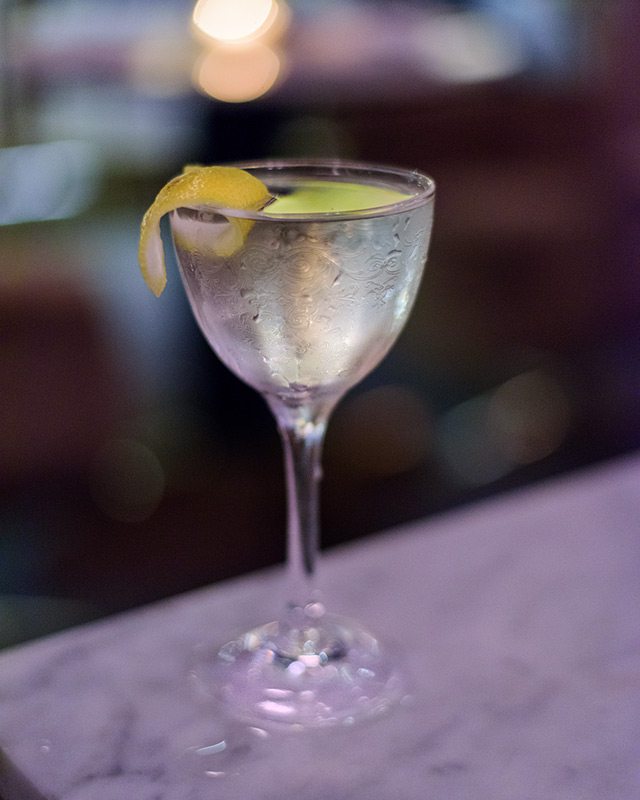
1.5oz. Plymouth Gin, 1.5oz. Dolin Dry Vermouth, 1 dash Orange Bitters, Garnish: Lemon Twist
Add these ingredients to a mixing glass. Stir until well chilled (about 30 seconds). Strain into a chilled cocktail coupe and garnish with a twist of lemon.
This cocktail is actually much closer to the historical Martini recipe than any other drink on this list. The others are substantially more alcohol forward, which became a bit of a trend in the 60s, nearly a century after its likely invention. This recipe showcases how vermouth can add beautiful delicate flavors to the cocktail and let you enjoy yourself without getting too plastered. Finding a balanced ratio between the two main ingredients is truly a matter of personal preference. Some people go classic with a 2:1 ratio of gin:vermouth. Others like 5:1, 8:1, or even 1:2, with more vermouth than gin. Nothing is set in stone.

Churchill Martini
2.5oz. Beefeater London Dry Gin, Garnish: Olive
Stir gin with ice while glancing at an unopened bottle of dry vermouth. Olive garnish
This was indeed how the legendary British Prime Minister ordered his cocktail. He kept it purely British, no French or Italian spirits tainting his gin. Boozy for sure. Fun fact: also how Eggsy took his Martini in the film Kingsman: The Secret Service. A simple riff on this recipe is the In-and-Out Martini. No, not the west coast burger joint. Simply rinse a chilled martini glass with around a quarter ounce of vermouth, coating the glass. Then dump it out. Strain in your chilled gin (or vodka), and bang, gin with essence of vermouth.

Vodka Martini, Shaken not Stirred
2.5oz. Vodka (I recommend Ketel One), 0.5oz. Martini Dry Vermouth, Garnish: Olive
Add your ingredient to a three-piece shaker with ice. shake until chilled (8-10 seconds). strain into a chilled martini glass. Garnish with an olive on a pick. 
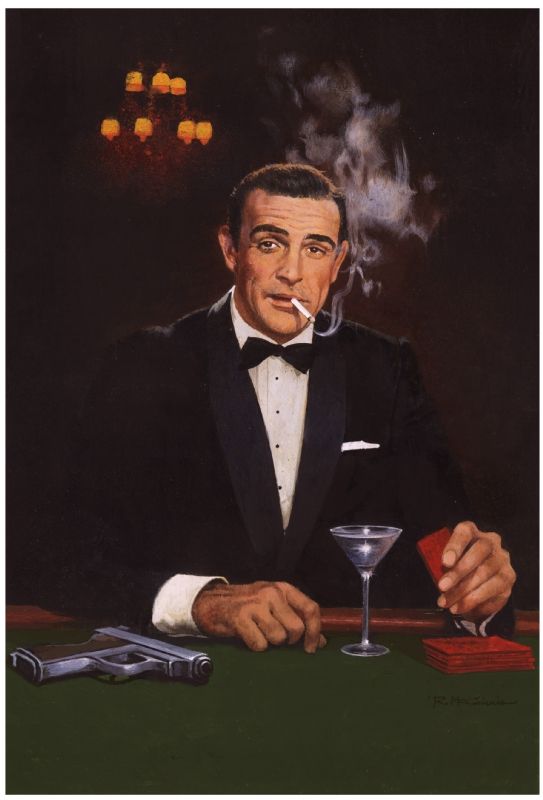
Yes, we're going the James Bond route. Well, rather the Sean Connery route. There's some debate as to how this drink became so popular. This was how bond ordered it in the 6th book "Doctor No", which was the first Sean Connery film. But Bond had invented and drank countless other drinks throughout the many books. I'm sure someone has counted them. This drink is unnecessarily watered down and likely has air bubbles and ice shards floating around in it. Perhaps the weaker drink allowed Bond to retain his composure for longer while on the job. This texture is desirable to some but rather uncommon in spirit-forward drinks which could be stirred allowing for a silky clean feel. Some people think that it does make it colder and easier to drink quickly. Up to you, my father likes them.

Diamond Martini
2.5oz. Vodka (I recommend Ardent Union), 1 dash Martini Dry Vermouth, Garnish: Lemon Twist
Batch up these ingredients together. Store them in the freezer until it's as cold as possible. Pour into a chilled martini glass when ready. Garnish with a lemon twist. 
This is the exact opposite of the last Martini. It's all booze, chilled down cold as possible and served with no dilution. It feels like booze. Dilution is a crucial component of every cocktail. Eliminating the water that naturally mixes with the drink creates an imbalance. Feel free to use a 100 proof vodka to really drill the extremes of this example. Or just stick a bottle of Everclear in the freezer. Some people genuinely do just like drinking cold vodka without dilution or mixer, but I find that is a fairly regional preference.

Dirty Martini
2.5oz. gin, 0.5oz. Dry Vermouth, 0.5oz. Spanish Olive Brine, Garnish: Bleu Cheese Stuffed Olive
Add these ingredients to a mixing glass. Stir until well chilled (about 30 seconds). Strain into a chilled cocktail coupe and garnish with a bleu cheese olive on a pick.
There is a lot of debate about when people started garnishing the martini with olives rather than a twist. According to a story on NPR, a Syrian bar owner in Paris wanted to show off the fruit of his homeland and started sticking them in drinks and it caught on. the added salt and vinegar which was used to store and preserve the fruit created an amazing depth to the otherwise fairly light flavor. I prefer bleu cheese olives personally but it's common to find olives stuffed with garlic, pimento, or other peppers to add some different spice character to the drink. Some people will also use olive juice in place of brine, or even run olives through a centrifuge to extract the essential oils (please make sure these are food safe before purchasing/ingesting).

Perfect
2oz. Tanqueray Gin, 0.5oz. Noilly Prat Dry, 0.5oz. Noilly Prat Sweet, Garnish: Lemon Twist
Add these ingredients to a mixing glass. Stir until well chilled (about 30 seconds). Strain into a chilled cocktail coupe and garnish with a twist of lemon.
This is a sort of step in between the Martini and the Martinez. The drink calls for sweet and dry vermouth. It injects a lot more fruit character into the drink. I don't like an overly complicated and botanical gin for this drink. Tanqueray is famous for having only 4 botanicals which make it less likely to have a clash with any of the ingredients in the vermouth you're using. Feel free to mix and match your ingredients for this one, and all of the other cocktails as well. 

This should have given you a full understanding of what the martini can be in every respect. No two people like their martini's the exact same way. Though obviously, not everyone has had a martini every way you can possibly make it. At least none who have survived. A martini is a very personal thing. Have a conversation with your guest. What spirit? What brand? If they want any vermouth, and how much? What garnish? Ordering a martini means you have to talk to your bartender, eventually they will learn your tastes and make it your way every time. Even then, it's still fun to try new ingredients and ratios to see how your tastes change over time. I would never make the martini I make for myself at home for a random guest at a bar. Who knows? Maybe one of you can make me a drink even better than how I make them for myself. Two people have done it for me so far and it made my life all the better. 

Sunday, July 12, 2015

Gin 201: The Different Botanicals

Juniper Berries
This is what gives gin that note of Christmas trees. All gins have to use juniper in order to be called gin. This goes way back to when gin was first invented and they started modifying the recipes from Dutch genever. Legally Juniper has to be the predominant flavor. That rich pine flavor actually comes from the fruit of the evergreen tree. Well, not really a fruit, but a seed or conifer cone. It also has slight notes of lavender and occasionally a touch of heather. Juniper is a very potent flavor and gins that are too juniper-forward tend to be very off-putting to the average drinker so a rounded, balanced gin is much more preferable for most distillers.

Cassia Bark
Cassia Bark is a close relative to cinnamon. Many people find that cassia has a slightly more delicate flavor though. It again comes from a breed of the evergreen tree this time originating in the south of China. Many gin makers source their cassia from other countries like Indonesia, Thailand. India, and Vietnam. Chinese Cassia does remain the most common. In gin, the freshly dried bark is typically ground to release as much of the flavorful oils as possible. Cassia bark supposedly is also good for blood pressure.

Angelica Root
Angelica root, sometimes known as wild celery, is grown widely in Northeast Europe. It does have its roots in the celery family, no pun intended but has a more woody vanilla smell. It blooms as a many-headed flower and is often harvested in the winter months. Angelica is rarely a dominant flavoring component; it is more being used as a balancing agent to bind the harmonies of various oils together. It does add a slight earthy tone but it more about providing a balance. Angelica is also used as medicine to fight viruses and bacteria.

Orris Root
Orris is really just a part of the Iris flower. This isn't used in the vast majority of gins but it is a fairly common component in more floral gins. Flavor wise it is very similar to violets. Tragically, due to its allergenic nature orris root was banned in many parts of Europe and the US, though this ban is mainly for cosmetics and scents. In gin production, the flower is harvested in late summer and made to dry a couple years before being ground. As with most gin ingredients Orris root has been used in medicine, in this case, it's helpful with sore throats and as an anti-inflammatory.

Coriander
Coriander is the seed of the cilantro plant, also known as Chinese parsley or dhania. The entire cilantro plant is edible, stem seeds and leaves, but the vast majority of gin producers only use the seed. The flavor of the leaves and seeds are similar in a few regards but really have completely different profiles. It's worth mentioning that coriander seeds if consumed in severely high doses, can act as a narcotic. This goes away during gin production though. Coriander is probably the second most botanical in gin actually. Its flavor is a blend of citrus and sage. Its aroma is very akin to rose actually. Coriander in olden times was used to fight flatulence and arthritis.

Grains of Paradise
Grains of paradise are native to West Africa and Ethiopia. This area became known as The Pepper Coast. Grains are actually the seeds of a member of the ginger family. It's also known as Melegueta pepper, alligator pepper or Guinea pepper. These are often used in medicine as stimulants. The flavor is of course quite spicy and peppery, but the aroma is a bit more floral than your standard black pepper. Several centuries ago it was actually more common to use grains of paradise in cooking than pepper. Its use in gin was actually briefly banned in England for tricking people into thinking that the spirit was stronger than it really was.

Cardamom Pods
Cardamom is actually a member of the ginger family. It's native to southern India and is very hard to grow and cultivate aside from very hot climates like Tanzania and Guatemala. It is thus also one of the most expensive spices. 5000 years ago it was used in tooth cleaners and perfumes. Cardamom is widely used in South Asian cuisine, namely curries. There is black cardamom and green cardamom. Black has an almost peaty, smokey flavor while green is more floral, like the eucalyptus. Cardamom is a very warm flavor, slightly sweet, but very pungent.

Citrus Peel
The oils from lemon and orange peels are used very regularly in gin production. Almost everyone knows the flavor of citrus and it's very easy to place a citrus heavy gin. A fun fact is that the aroma molecules of a lemon are the mirror opposite of those of an orange. Citrus oils are great for a number of healing factors. It's good for the skin and also acts as a mild sedative, anti-inflammatory, and diuretic. Citrus was also used to fight scurvy which made it almost a necessity among British naval sailors, who popularized the gin and tonic. Another useful aspect of citrus is that it's helpful as a cleaning agent. That's right, lemon Pledge actually has a reason to be lemon scented. This actually makes a distillers job easier as the tanks don't get as dirty when citric acid is in the gin.

Other botanicals may include lemongrass, black peppercorn, cucumber, rose, cubeb berries. anise, licorice, almonds, grapefruit, chamomile, sarsaparilla, nutmeg, saffron

"The intense perfumes of the wild herbs as we trod them underfoot made us feel almost drunk."
- Jacqueline du Pre

Photo Credit: Wikimedia, Pixabay

Thursday, December 25, 2014

Gin 401: Dissecting the Gin and Tonic

I once read that some Japanese bartenders and bar enthusiasts regard the gin and tonic as the face of the bar. Some students of mine may remember a few stories I told featured in this manga: Bartender. The story I'm referring to, however, takes a slightly less melodramatic approach than the first chapter. This chapter explains how every little detail of a Gin and Tonic affects how it ends up.

Ice:
  • What is the water source? Is it filtered or purified?
  • Is it machine made or natural?
  • How clear or cloudy is the ice?
  • What is the size of the chunks?
  • What shape are they?
  • How many pieces do you use?
Ratio:
  • Do you keep it 2:1 or go a bit stronger or weaker?
Gin:
  • What brand do you use?
  • How much do you use?
Tonic:
  • Do you use a syrup or go prepackaged? 
  • What brand do you use?
  • How much do you use?
Mixing:
  • Do you just build it in the glass?
  • Do you stir the cocktail?
Garnish:
  • What garnish do you use?
  • How do you cut it?
  • Do you extract any juice or flavor from it?
  • If so, do you add another bit for presentation


Most places, of course, use machine-made ice and it's typically not the largest size. Typically the glass is filled. The Gin, more often than not is whatever the customer requests or whatever is in the well. The tonic is often dispensed by the gun, Schweppes is the most common brand. Most bartenders don't mix it and just slide a lime wedge on the side, maybe a sip stick as well.

Try this drink with harder ice.
Try different gins. Bombay Sapphire East has a nice peppery note. Bluecoat is more citrusy
Schweppes is quite sweet. Try something citrusy or herbal like Fever Tree or Fentimans
See if your guests stir their G&T's. Some like keeping things separate.
Try squeezing in your juice or use the skin oils on the rim, or use some cucumber or lemon grass

For my new guests, I make my G&T's like this:
A tall thin highball glass is filled with hard, large, cubed ice
Add 1 part Tanqueray gin and then carefully float 2 parts Fentimans tonic water on top
Place a lime wedge (1/6 lime) on the rim of the glass and slide in two sip sticks
This is for a number of reasons. Hard ice melts much slower than cubed ice so the drink waters down slower. The guest can wait for there to be more water if they want. Tanqueray is a very popular gin but remains quite well rounded, not very citrusy or herbal. Fentimans is a nice herbal change of pace not everyone is used to. This is where I sort of make my mark. A guest will usually note something fairly unique about this and either smile curiously or require something sweeter or more acidic. I layer it so the guest has the choice of how to drink it. Some guests prefer sipping the gin straight through the straw and sipping the chaser from the rim. The thin glass helps keep the fluids separate as well. The lime I offer, and if the guest discards it I know not to offer it again. If they drop it in or squeeze it in I learn more about their tastes, that they like some acidity.

For myself, I usually make my G&T's like this:
A large rocks glass with a clear massive king cube that I crack with a bar spoon, maybe two. 
Add 1 1/2oz Bombay Sapphire East and then float 2oz Fever Tree Indian Tonic
Squeeze a lime wedge in, discard it, and put another one on the rim, take a sip stick and stir
I know I like my Gin and Tonics mixed. My choice of product has a nice Indian spice to it, in the gin and the tonic water. The cracked ice gets it cold quickly enough but will melt more to my liking at the end of the drink. I like to linger with my drinks and I like some variety in a drink. It starts with a nice spice and a dash of citrus and slowly gets easier to sip as I stir and the ice melts. If I want I can take the lime and zazz up the drink if it gets dull at all. 

"I exercise extreme self-control. I never drink anything stronger than gin before breakfast." 
-W. C. Fields

Photo Credit: wikimedia

Sunday, November 16, 2014

Beginner's Flight: Gin

This is going to be a series of posts about how to start sampling different types of spirits if you are a beginner drinker. What's the difference between bourbon, scotch, and Irish whiskey. How is London dry gin different from American or Indian made gin? The best way to figure out what you like is to go out and try things. With so many options out there I thought it would be nice to give newbies a jumping-off point into their world of spirits. I'm trying to find bottles that are available at nearly every liquor store or can be tracked down easily enough. Today, I'm talking about gin. 

To a novice drinker, they might think that all gins are the same, but when you think about it gins are as diverse as flavors of vodka. Any martini drinker will tell you their favorite gin. And they do have a favorite, due to its specific flavor profile and mouthfeel. Different gins from different regions tend to be flavored with different styles of botanicals.

1. Tanqueray.
 

Tanqueray is one of the oldest gins in production today. It's been around 180 years. It is one of the most juniper prevalent gins on the market today with less than a handful of other flavoring agents. This is very much a pure form of what gin's history was. The juniper does come through in a big way which many purists love.

2. Bluecoat. 
Bluecoat is an American made gin. It's made right in Philadelphia with their local waters. I suppose that's not the best selling point but people like supporting local products. Many beginning gin drinkers like this gin because it has a very strong citrus note. The new flavor of juniper isn't very appealing to a lot of the younger crowd, but the citrus from the lemongrass is a bit more accessible.

3. Bombay Sapphire East. 
Bombay does a large range of gins. Bombay Sapphire East is actually inspired by old Indian recipes with a bit more of a spice to it than the more botanical London Dry Gins. This uses peppercorns to add flavor. It pairs very nicely with some Fevertree Indian Tonic Water. This makes for a very fun tool to use in some new and classic cocktails.

4. Hendrick's.
 

Hendrick's gin is actually Scottish made. This gin actually uses some unconventional flavoring agents. It has strong notes of cucumber. This is a very playful gin that does kind of break the mold a bit as to what people are used to and has thus become a favorite ingredient for bartenders across the globe. The Hendricks Negroni is a real fan favorite. Some do prefer a more floral or fruity gin, but Hendrick's is certainly worth giving a shot.

Special mentions to: Beefeater, Aviation, Plymouth

"I like to have a Martini, two at the very most; three, I'm under the table, four I'm under my host!"
- Dorothy Parker

Photo Credit: Wikimedia, pikrepo