Showing posts with label Martini. Show all posts

Tuesday, October 6, 2020

Love isn't all coke and roses

The term "Love is not all wine and roses" is a common idiom I heard growing up as people waxed poetic, knowing little about love, wine, or flowers. It may have derived from a poem by Ernest Dowson, which referred to "the days of wine and roses: out of a misty dream." The great Tim Minchin has a lyric in one of his songs: "Love is not all wine and roses, sometimes it's handcuffs and cheese." I like that version the best. 

1 oz Fords Gin Officers Reserve
0.75 oz Cocchi Rosa 
0.5 oz Agwa
1 barspoon Lime Acid Solution
10 drops Crude Sycophant Orange and Fig Bitters

Stir all the ingredients together with ice and strain into a cocktail glass. Garnish with an orange twist flower. 

Agwa is a liquor with the prominent flavor of coca leaf, the base used to produce Cocaine. The additive's illegal elements have been removed (where they went, I don't know). There is an invigorating spice kick to this herbaceous liqueur and cocktail. 

Perhaps I overstep here, but I had two bottles of Agwa kicking around and thought the name was funny. I do not partake in anything implied in this drink and discourage anyone from participating in unlawful behavior. But if music, TV shows, and other media are allowed to poke fun at a subject matter, why can't other artistic expressions. I even drank an energy drink named Cocaine, though they did get shut down in some countries. I doubt I'll get any big liquor companies dying to advertise this drink on their own media, but I hope the concept inspires somebody to make something they wouldn't have thought otherwise. Eat and drink the weird stuff. Traditions exist, and you can get by simply following them. But we live in an age where everything everywhere is available to just about everyone if you are willing to pay the shipping costs. Have a laugh

Monday, September 21, 2020

What a Pear

I don't rightly recall the occasion I first made this drink. But it remains absolutely delicious, and any time I have all the ingredients on hand, this is one of my go-to martini builds. It's a beautiful fruity martini with notes of white flowers and pear. 

1.5 oz. Ford's Gin
0.5 oz. Grey Goose La Poire
1 oz. Alessio Bianco Vermouth
2 dashes Hella Co. Orange bitters

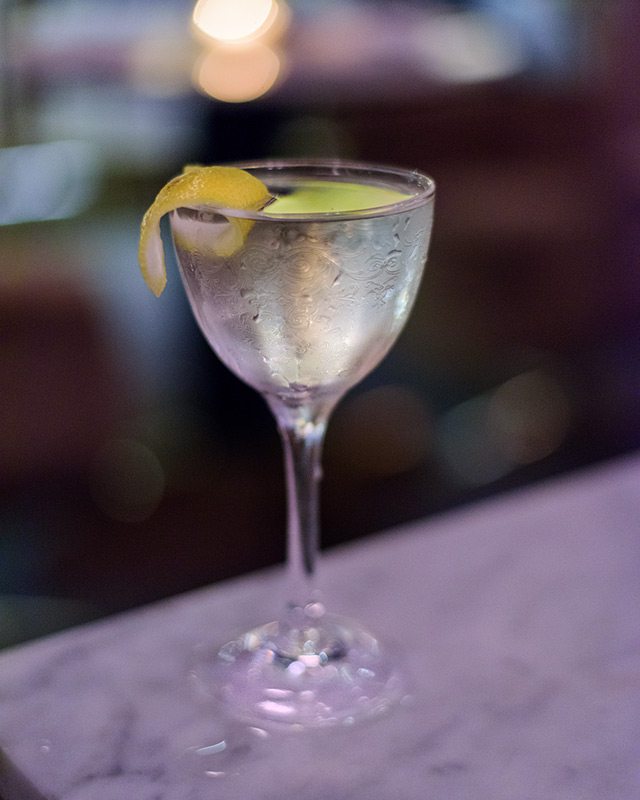
Add all of the ingredients to a mixing tin with ice. Stir until well chilled, approximately 18 seconds. Strain into a chilled coupe. Garnish with a lemon twist.

The inspiration for this cocktail came from my dear friend Catherine Manning. Her drink of choice is always a 50/50 martini with Bianco Vermouth. Alessio recently came to our shelves in Pennsylvania and has been gaining notoriety. I wanted to highlight the flavors, bringing a bit of pear and notes of white flowers with the vodka and gin. A bit of citrus oil balances it out, and we have a martini that stays bright and playful any day of the week. Cheers.

Photo Credit: Micah Messinger

Sunday, November 10, 2019

Gin 402: Dissecting a Cocktail: 101 ways to Martini

Someone walks into your bar and asks for a martini. What do you make them? The following are 12 examples of the classic drink. this showcase should run the gamut of what this drink can be. There are a couple variables that aren't directly measured like how many olives do you want in your dirty martini but pish. P.s. Please don't drink all of these in one sitting. It's actually a lot of fun to batch them all up and do 6 1/2 ounce pours of them to really learn your own palette and tastes.

50/50 Martini
1.5oz. Plymouth Gin, 1.5oz. Dolin Dry Vermouth, 1 dash Orange Bitters, Garnish: Lemon Twist
Add these ingredients to a mixing glass. Stir until well chilled (about 30 seconds). Strain into a chilled cocktail coupe and garnish with a twist of lemon.
This cocktail is actually much closer to the historical Martini recipe than any other drink on this list. The others are substantially more alcohol forward, which became a bit of a trend in the 60s, nearly a century after its likely invention. This recipe showcases how vermouth can add beautiful delicate flavors to the cocktail and let you enjoy yourself without getting too plastered. Finding a balanced ratio between the two main ingredients is truly a matter of personal preference. Some people go classic with a 2:1 ratio of gin:vermouth. Others like 5:1, 8:1, or even 1:2, with more vermouth than gin. Nothing is set in stone.

Churchill Martini
2.5oz. Beefeater London Dry Gin, Garnish: Olive
Stir gin with ice while glancing at an unopened bottle of dry vermouth. Olive garnish
This was indeed how the legendary British Prime Minister ordered his cocktail. He kept it purely British, no French or Italian spirits tainting his gin. Boozy for sure. Fun fact: also how Eggsy took his Martini in the film Kingsman: The Secret Service. A simple riff on this recipe is the In-and-Out Martini. No, not the west coast burger joint. Simply rinse a chilled martini glass with around a quarter ounce of vermouth, coating the glass. Then dump it out. Strain in your chilled gin (or vodka), and bang, gin with essence of vermouth.

Vodka Martini, Shaken not Stirred
2.5oz. Vodka (I recommend Ketel One), 0.5oz. Martini Dry Vermouth, Garnish: Olive
Add your ingredient to a three-piece shaker with ice. shake until chilled (8-10 seconds). strain into a chilled martini glass. Garnish with an olive on a pick. 
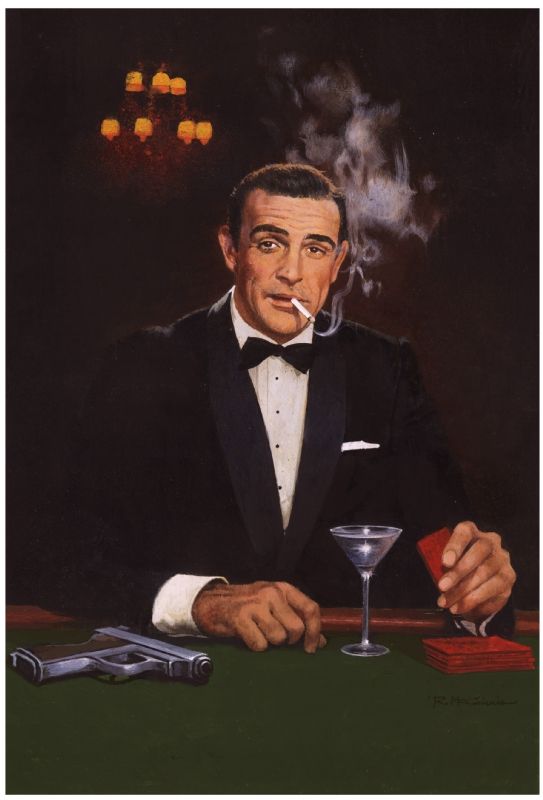
Yes, we're going the James Bond route. Well, rather the Sean Connery route. There's some debate as to how this drink became so popular. This was how bond ordered it in the 6th book "Doctor No", which was the first Sean Connery film. But Bond had invented and drank countless other drinks throughout the many books. I'm sure someone has counted them. This drink is unnecessarily watered down and likely has air bubbles and ice shards floating around in it. Perhaps the weaker drink allowed Bond to retain his composure for longer while on the job. This texture is desirable to some but rather uncommon in spirit-forward drinks which could be stirred allowing for a silky clean feel. Some people think that it does make it colder and easier to drink quickly. Up to you, my father likes them.

Diamond Martini
2.5oz. Vodka (I recommend Ardent Union), 1 dash Martini Dry Vermouth, Garnish: Lemon Twist
Batch up these ingredients together. Store them in the freezer until it's as cold as possible. Pour into a chilled martini glass when ready. Garnish with a lemon twist. 
This is the exact opposite of the last Martini. It's all booze, chilled down cold as possible and served with no dilution. It feels like booze. Dilution is a crucial component of every cocktail. Eliminating the water that naturally mixes with the drink creates an imbalance. Feel free to use a 100 proof vodka to really drill the extremes of this example. Or just stick a bottle of Everclear in the freezer. Some people genuinely do just like drinking cold vodka without dilution or mixer, but I find that is a fairly regional preference.

Dirty Martini
2.5oz. gin, 0.5oz. Dry Vermouth, 0.5oz. Spanish Olive Brine, Garnish: Bleu Cheese Stuffed Olive
Add these ingredients to a mixing glass. Stir until well chilled (about 30 seconds). Strain into a chilled cocktail coupe and garnish with a bleu cheese olive on a pick.
There is a lot of debate about when people started garnishing the martini with olives rather than a twist. According to a story on NPR, a Syrian bar owner in Paris wanted to show off the fruit of his homeland and started sticking them in drinks and it caught on. the added salt and vinegar which was used to store and preserve the fruit created an amazing depth to the otherwise fairly light flavor. I prefer bleu cheese olives personally but it's common to find olives stuffed with garlic, pimento, or other peppers to add some different spice character to the drink. Some people will also use olive juice in place of brine, or even run olives through a centrifuge to extract the essential oils (please make sure these are food safe before purchasing/ingesting).

Perfect
2oz. Tanqueray Gin, 0.5oz. Noilly Prat Dry, 0.5oz. Noilly Prat Sweet, Garnish: Lemon Twist
Add these ingredients to a mixing glass. Stir until well chilled (about 30 seconds). Strain into a chilled cocktail coupe and garnish with a twist of lemon.
This is a sort of step in between the Martini and the Martinez. The drink calls for sweet and dry vermouth. It injects a lot more fruit character into the drink. I don't like an overly complicated and botanical gin for this drink. Tanqueray is famous for having only 4 botanicals which make it less likely to have a clash with any of the ingredients in the vermouth you're using. Feel free to mix and match your ingredients for this one, and all of the other cocktails as well. 

This should have given you a full understanding of what the martini can be in every respect. No two people like their martini's the exact same way. Though obviously, not everyone has had a martini every way you can possibly make it. At least none who have survived. A martini is a very personal thing. Have a conversation with your guest. What spirit? What brand? If they want any vermouth, and how much? What garnish? Ordering a martini means you have to talk to your bartender, eventually they will learn your tastes and make it your way every time. Even then, it's still fun to try new ingredients and ratios to see how your tastes change over time. I would never make the martini I make for myself at home for a random guest at a bar. Who knows? Maybe one of you can make me a drink even better than how I make them for myself. Two people have done it for me so far and it made my life all the better. 

Monday, May 1, 2017

BOLS of Pears

This cocktail was a collaboration between myself and my dear friend Micah. For the first round of the Bols Around The World competition, we were required to make a cocktail that was a variant of a classic cocktail that would be drunk in the year 2025. It was a very humorous notion but one that did inspire thoughts of new techniques and the trends of today. 

2.25 oz. Pear, lime leaf Genever
3/4 oz. Dolin Blanc Vermouth
1 dash Angostura Orange Bitters
Lemon Twist

Stir all of the ingredients in a mixing glass with ice. Strain the cocktail into a coupe. Garnish with an expressed lemon twist.

Instructions for infused Bols Genever:
Preheat a water bath to 130°F/54°C. Place 8 oz. of Bols Genever, 2 Asian pears (diced), and 5 fresh kaffir lime leaves in a sealed plastic bag. Let the Bols Genever infusion cook for 3 hours. Remove the bag from the water bath and let it come back to room temperature. Strain the infusion.


Bols of Pears is an homage to the Turf Cocktail no. 2, a classic relative of the martini. Normal infusion of Bols Genever, Asian pear, and kaffir lime leaf can take up to 2 months. Using the modern cooking technique of sous vide you can infuse much faster due to heating up the infusion and having it sealed so none of the alcohol steam escapes. By the year 2025, this technique will be used more and more to create faster infusions for unique cocktails.

The unashamed sweet flavors of this cocktail while still maintaining impeccable balance is why Bols Genever has been a favorite since I discovered it. We decided on mixing it up with kaffir lime leaf and Asian pears because so many modern technologies are being created and perfected in Eastern Asia. I love how much parts of Eastern Asia continue to strive to create new ideas while maintaining customs and cultures of the past. This is exactly what Bols of Pears represents: striving for exciting cutting edge ideas while still maintaining respect for tradition.

"Always do sober what you said you'd do drunk. That will teach you to keep your mouth shut."
- Ernest Hemingway

Monday, August 31, 2015

Golden Apple Martini

This was actually a discussion I had almost a year ago over the best way to make an appletini. Many bartenders would say 2:1 vodka and sour apple pucker. This drink somehow gained popularity. Lord, if I know how. I suppose it was the simplicity of the drink in combination with the craze of the fancy glass. It's also incredibly easy to make at home if it's a drink you particularly like. All you needed was two bottles. On my opinion, though, the drink is rubbish. Many people have jazzed it up so to speak with sour mix, lemon juice, or citrus vodka. none of which really save the drink, they merely help balance a bit of the sweetness and lessen the proof. I wanted to take my crack at it

1 1/2 oz. Citrus Vodka
3/4 oz. Berentzen Apple Liqueur
1/2 oz. Fresh Lemon Juice
1/2 oz. Rich Honey Syrup

Add all the ingredients to a shaker tin with ice. Shake the drink well and double strain into a chilled cocktail glass. Garnish with a golden delicious apple fan.

This drink was sort of inspired by the various appletini recipes I've seen and blended with a sort of sour and Cosmopolitan recipe. I thought of creating an apple shrub or using a calvados, but I wanted something that would be fairly accessible to the average person, as that was a part of the appeal of the original. I think the flavors carry over well and do give the proper taste of an apple rather than the sour sugar taste you get from most appletini's.

"I'll have an Appletini and the girliest drink in the house"
"Two Appletinis coming right up"
- Scrubs

Sunday, July 12, 2015

Gin 201: The Different Botanicals

Juniper Berries
This is what gives gin that note of Christmas trees. All gins have to use juniper in order to be called gin. This goes way back to when gin was first invented and they started modifying the recipes from Dutch genever. Legally Juniper has to be the predominant flavor. That rich pine flavor actually comes from the fruit of the evergreen tree. Well, not really a fruit, but a seed or conifer cone. It also has slight notes of lavender and occasionally a touch of heather. Juniper is a very potent flavor and gins that are too juniper-forward tend to be very off-putting to the average drinker so a rounded, balanced gin is much more preferable for most distillers.

Cassia Bark
Cassia Bark is a close relative to cinnamon. Many people find that cassia has a slightly more delicate flavor though. It again comes from a breed of the evergreen tree this time originating in the south of China. Many gin makers source their cassia from other countries like Indonesia, Thailand. India, and Vietnam. Chinese Cassia does remain the most common. In gin, the freshly dried bark is typically ground to release as much of the flavorful oils as possible. Cassia bark supposedly is also good for blood pressure.

Angelica Root
Angelica root, sometimes known as wild celery, is grown widely in Northeast Europe. It does have its roots in the celery family, no pun intended but has a more woody vanilla smell. It blooms as a many-headed flower and is often harvested in the winter months. Angelica is rarely a dominant flavoring component; it is more being used as a balancing agent to bind the harmonies of various oils together. It does add a slight earthy tone but it more about providing a balance. Angelica is also used as medicine to fight viruses and bacteria.

Orris Root
Orris is really just a part of the Iris flower. This isn't used in the vast majority of gins but it is a fairly common component in more floral gins. Flavor wise it is very similar to violets. Tragically, due to its allergenic nature orris root was banned in many parts of Europe and the US, though this ban is mainly for cosmetics and scents. In gin production, the flower is harvested in late summer and made to dry a couple years before being ground. As with most gin ingredients Orris root has been used in medicine, in this case, it's helpful with sore throats and as an anti-inflammatory.

Coriander
Coriander is the seed of the cilantro plant, also known as Chinese parsley or dhania. The entire cilantro plant is edible, stem seeds and leaves, but the vast majority of gin producers only use the seed. The flavor of the leaves and seeds are similar in a few regards but really have completely different profiles. It's worth mentioning that coriander seeds if consumed in severely high doses, can act as a narcotic. This goes away during gin production though. Coriander is probably the second most botanical in gin actually. Its flavor is a blend of citrus and sage. Its aroma is very akin to rose actually. Coriander in olden times was used to fight flatulence and arthritis.

Grains of Paradise
Grains of paradise are native to West Africa and Ethiopia. This area became known as The Pepper Coast. Grains are actually the seeds of a member of the ginger family. It's also known as Melegueta pepper, alligator pepper or Guinea pepper. These are often used in medicine as stimulants. The flavor is of course quite spicy and peppery, but the aroma is a bit more floral than your standard black pepper. Several centuries ago it was actually more common to use grains of paradise in cooking than pepper. Its use in gin was actually briefly banned in England for tricking people into thinking that the spirit was stronger than it really was.

Cardamom Pods
Cardamom is actually a member of the ginger family. It's native to southern India and is very hard to grow and cultivate aside from very hot climates like Tanzania and Guatemala. It is thus also one of the most expensive spices. 5000 years ago it was used in tooth cleaners and perfumes. Cardamom is widely used in South Asian cuisine, namely curries. There is black cardamom and green cardamom. Black has an almost peaty, smokey flavor while green is more floral, like the eucalyptus. Cardamom is a very warm flavor, slightly sweet, but very pungent.

Citrus Peel
The oils from lemon and orange peels are used very regularly in gin production. Almost everyone knows the flavor of citrus and it's very easy to place a citrus heavy gin. A fun fact is that the aroma molecules of a lemon are the mirror opposite of those of an orange. Citrus oils are great for a number of healing factors. It's good for the skin and also acts as a mild sedative, anti-inflammatory, and diuretic. Citrus was also used to fight scurvy which made it almost a necessity among British naval sailors, who popularized the gin and tonic. Another useful aspect of citrus is that it's helpful as a cleaning agent. That's right, lemon Pledge actually has a reason to be lemon scented. This actually makes a distillers job easier as the tanks don't get as dirty when citric acid is in the gin.

Other botanicals may include lemongrass, black peppercorn, cucumber, rose, cubeb berries. anise, licorice, almonds, grapefruit, chamomile, sarsaparilla, nutmeg, saffron

"The intense perfumes of the wild herbs as we trod them underfoot made us feel almost drunk."
- Jacqueline du Pre

Photo Credit: Wikimedia, Pixabay

Sunday, June 21, 2015

Shakers

There are two main types of shakers used by bartenders across the globe. Each bears its own merits. Some are designed for aesthetics while others are designed for versatile use. 

The Boston Shaker
Supposedly the first concept of a shaker goes back to well before the common era to Central and South America where it was used to incorporate chocolate into a beverage. The Egyptians also used it to incorporate spices. The shaker as we know it today goes back to the late 1800s where an innkeeper noticed that two of his serving vessels nested together. In 1872, a device was actually patented to shake six drinks at once.

In America and many other countries, when you shake a drink, it's going to be in a Boston shaker. Especially in a high volume bar environment. The two pieces of a Boston shaker are very multi-purpose. Mixing glasses can be used as beer glasses or even collins glasses. Take a mixing tin, and insert it with the open end down over the mixing glass and give it a light smack to make a seal. Most bartenders find it easier to create a seal with the tin cocked to the side to create a flush seal between the glass and tin. This makes it easier to separate the two once shaken. Shake vigorously, horizontally, rather than up and down, for 8-10 seconds. to break the seal that has most likely tightened due to the ice shrinking the metal strike the side of the tin, at the rim, 90 degrees from where the two parts are flush. This should break the seal and allow the removal of the glass.

Variants of the glass on tin combination are very common. Many craft bartenders have opted to use smaller, 16 oz., cheater tins to make the seal rather than a mixing glass. this allows for a seal that can be gripped and maintained with one hand while shaking. This allows for the shaking of two drinks at once which is very handy at craft cocktail bars as they have become famous date venues. No one wants to stare at their drink waiting for their partner to get theirs, so two drinks at once allow for a proper toast. The French shaker may deserve its own category, but I regard it as a simple variant to the standard Boston shaker. The smaller tin is specially designed to create a perfect seal with the mixing tin and bows in to create a firm grip for the bartender. This also has the advantage of not having any glass that could break.

The Cobbler / Three Piece Shaker
The cobbler shaker has a similar design but with an added dedicated middle piece in the design. It dates back to 1884 as a modification to the Boston shaker which included a built-in strainer. One simply builds the drink in the bottom tin, adds the middle strainer piece to the top of the tin, and then adds the cap on top to create a full seal. Some people say that this incorporates less air into the drink and that when liquid gets trapped between the top two pieces it creates a less emulsified drink. I do find myself just naturally shaking these drinks longer to make sure it's well chilled. Personally, I really don't enjoy this style of the shaker as they often can become stuck together and impossible to separate. With a bit of training, I'm told this won't occur but I really don't see it as a time saver in the long run. There is still a separate strainer piece you need to clean and the pieces are far less versatile. These styles of strainers can look very impressive and ornate, but they really don't serve many functions, all things considered. 

"You can't buy happiness, but you can prepare a cocktail, and that's kind of the same thing."

Photo Credit: Wikimedia, Project Noun

Tuesday, April 21, 2015

Popped Belvedere Martini

This was a Cocktail I created for the Belvedere Vodka's The Challenge. The goal being to create a legendary vodka martini cocktail. This was the first video I ever did for a competition and I had fun editing. I have a lot more videos planned for the future, but it was good getting my feet wet. This was just filmed in my dining area. Future videos will probably be done at Aqua Vitae Institute. They will also probably feature my face.

1 1/2 oz. Belvedere Vodka
1/4 oz. Dry Vermouth
1/4 oz. Tuaca
1/2 oz. Oleo-Saccharum

Despite using a sugar and oil mixture, this is a stirred cocktail. Add the ingredients to a mixing glass with ice. It helps to add the Oleo last. Stir very vigorously so that the oil is still emulsified into the drink. Strain into a chilled cocktail glass. Garnish with a lemon twist.

To make Oleo-Saccharum:
Peel 4 lemons into a bowl (you can use the remainder for juice). Slowly add 8 oz. of sugar to the bowl of peels while muddling. Keep muddling around breaking down any lumps of sugar, working the sugar into the peels. This should take about 15 minutes. Let this sit overnight and a pool will collect of sugared lemon oil. Add eight ounces of hot nearly boiling water to the bowl. Strain out the liquid making sure to filter out all the pulp, pressing on the pulp to get all the Oleo out.

This was actually a quite difficult contest as the rules state you could only use a total of two ounces in total of any alcoholic ingredients. Even the smallest martini I would make would be two ounces of vodka and then about a third of an ounce of vermouth. I decided to make my recipe include that ration of 6:1 vodka to vermouth. But I had to make my martini unique, something that would make the vodka really pop. I opted to use Tuaca and a lemon oleo-saccharum. Tuaca brings a great vanilla note which brings out the smoothness of the vodka, as well as a citrus with compliments the vermouth and some of the subtler flavors of the vodka. The Oleo also helps add a sweetness to the drink, but the main component of it is the addition of the oily nature. Despite the vast majority of the drinking being fairly strong spirit, the oily nature makes it incredibly easy to drink down. 

P.S. The first video is up on YouTube. Check out the channel link on the right.

"I am prepared to believe that a dry martini slightly impairs the palate, but think what it does for the soul."
- Alec Waugh

Saturday, February 21, 2015

Sakura

The name Sakura means cherry blossom or cherry blossom tree. Naturally the name has been used in many an anime. There are characters named Sakura in Naruto, Get Backers, Street Fighter, Pokemon, and many other manga and films. There's even a popular anime called Cardcaptor Sakura, and a slightly less popular one simply called Sakura. The name tends to symbolize blooming and maturing with time. They can symbolize clouds. They bloom quickly and suddenly and die a quick death. Partly for this reason, in World War II, the image of a cherry blossom was used as national propaganda to instill Japanese pride. They were even painted on the sides of kamikaze planes. 


1 oz. Gin
1 oz. Sake
1/2 oz. Lemon juice
1/4 oz. Grenadine
1/4 oz. Cherry Heering
2 dashes cherry bitters

Add all the ingredients to a mixing tin with ice. Shake vigorously and strain into a chilled cocktail glass. Garnish with a brandied cherry or an edible flower.

I had in my head a flavor profile I wanted to try to create. I wanted a botanical feel as well as a sweetness of a light berry. I tinkered and tinkered with different ingredients. I tried Creme Yvette, acai liqueur, shochu, soju, flavored vodka, and everything felt too dominant or tart. I decided that gin alone created a good floral feel to the drink, but the proof was too high to make it a really dominant ingredient. In the liqueur store, I saw a gorgeous bottle of sake in a lovely pink hue that reminded me of the flowers. All that was left was the berry sweetness and color. Cherry Heering added the berry note but wasn't quite sweet enough and the color was a bit dark. Most people think grenadine is cherry juice anyway and it did add just the right touch of sweetness. 

This was just a cocktail I decided to make up. There are actually several signature cocktails around the globe that take the name sakura, or cherry blossom, like this, this, this, and this.

"I want to do to you what spring does with the cherry trees."
- Pablo Neruda