Tuesday, October 29, 2019

Mule in a Mill

This is my creation for Diageo World Class 2020. It's a riff on the cocktail I did for the Philadelphia Summer Cocktail Social. It's a simple riff on a mule where the lime juice is replaced by orange juice that has been tweaked to have the same acidity as lime. The peach flavors of Ketel One Botanicals pair amazingly with the dessert flavors of the amaretto. It's bright, refreshing and will fit palettes for all seasons.

1.5 oz. Ketel One Peach and Orange Blossom Botanicals
0.5 oz. Amaretto Di Saronno
1 oz. Acid Adjusted Orange Juice
1.5 oz. Fever Tree Ginger Beer

Add the Ketel One Botanicals, Amaretto, and Acid Adjusted Orange juice to a mixing tin. Add ice and shake lightly until chilled. Add the ginger beer into a highball glass with a large ice column. Strain the cocktail over the ginger beer. Garnish with a long ribbon of orange peel. Serve with a smile.  

To make Acid Adjusted Orange Juice:
Mix 1 liter of freshly squeezed and strained orange juice with 32 grams of citric acid and 20 grams of malic acid. Stir until mixed and uniform.

This cocktail is really about simplicity and precision. So many cocktails depend on ingredients that can be wildly inconsistent depending on when and where they are sourced. While local seasonal fruit can create amazing flavors, you never know what the acid content or sugar content is going to be exactly. I'm a carpenter. I like exact measurements. If one measure is off by as much as 1% it can make a table wobbly and unbalanced. Wild ornate cocktails have their place but without a stable, anchored base, they fall apart. Nature can be shaped to our will fairly easily. So that's what I did in this drink. The Ketel One Botanicals are a beautiful set of spirits that mix individual essences to turn out consistent crisp clean flavors. Again, building from parts to create a whole. Cheers.

Darcy's Donkey by Gaelic Storm
https://www.youtube.com/watch?v=C6N6W59nQh4

Thursday, October 17, 2019

Rims and Rimming

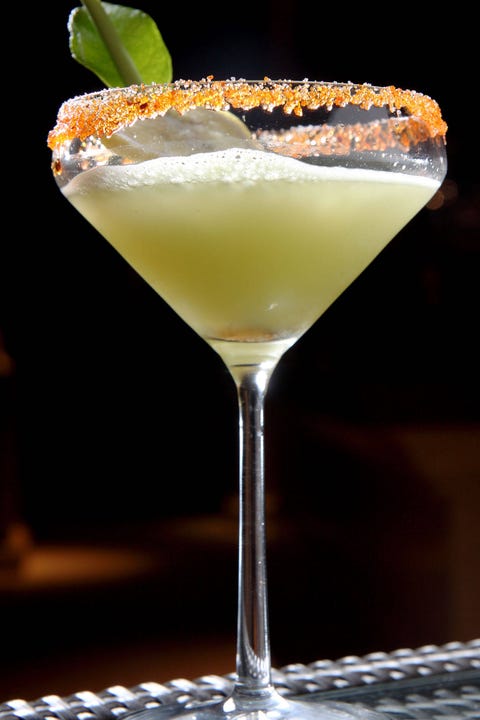
Adding a rim to a cocktail adds a whole new dimension to flavor and texture to your cocktails. a good cocktail rim allows a cocktail to taste a little bit different with every sip and allows the guest a more interactive experience with their drink.

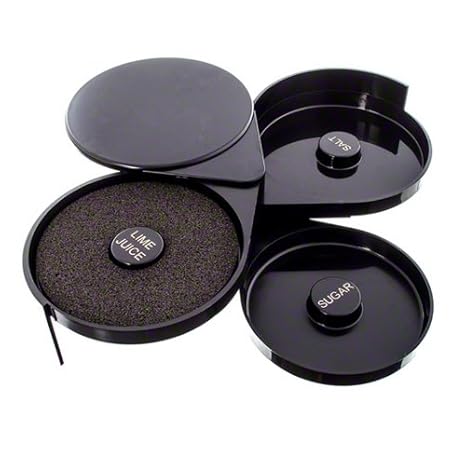
A lot of bartenders I see use a simple commercial rimmer for the sake of speed. Please don't use one of those hinged three-tiered monstrosities. The sponge they utilize to moisten the rim of the glass is rarely cleaned often enough and accumulates all kinds of bacterial growth. Also, this wets the inside of the glass as well as the outside. this is then dunked into sugar or salt which almost immediately gets mixed into the drink. and an extra half teaspoon of salt immediately being mixed into any cocktail will throw off the balance. A cool example of when you actually should have a rim on the inside is the Spanish Coffee where the sugar on the inside is actually burnt and turned into caramel which mixed into the hot cocktail.

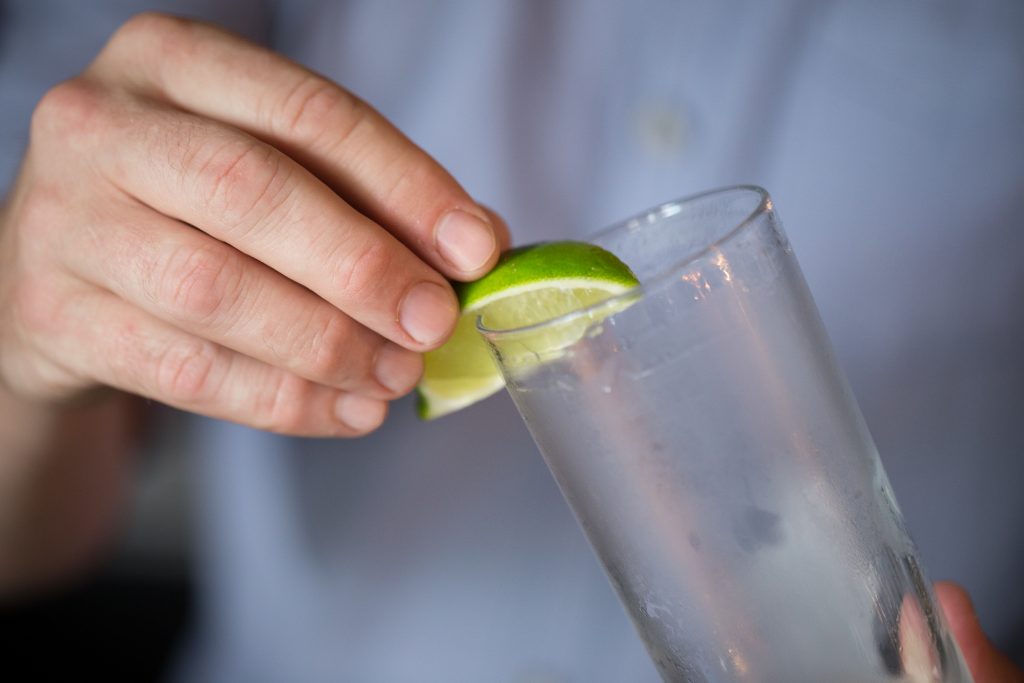
It is typically far more preferable to moisten the outside of the glass with a citrus wedge. Typically whatever citrus is used in the cocktail makes the most sense, but it's not a hard rule. A beautiful rim of salt around a margarita with a lime wedge is classic. I often use an atomizer to wet the glass. A mister filled with honey syrup was used in a few cocktails I've menued over the years. You also don't have to wet the entire rim. you can do just half or just a little decorative strip.

Fill a bowl or dish with your powdered rim of choice. Always add more than you think you'll need to guarantee a consistent coating overall.  Dunk your moistened glass into the bowl and give it a little twist in the powder. Pull out the glass and give it a little tap to break off any heavier clumps. Fill with your cocktail and you're good to go. 

It's also not unheard of to coat the rim of your glass with melted chocolate and allow it to cool into a tasty band. a lot of dessert drinks utilize chocolate. I've seen smores cocktails rimmed with chocolate syrup and crushed graham cracker dust. I've seen gold dust, gingersnap cookies, bacon salt with old bay seasoning for a Bloody Mary, and more.

Aside from the classic sugar and salt, some of my favorite rims are:

Spicy cinnamon sugar:
12 parts Sugar: 2 parts Ground Cinnamon: 1 part Cayenne Powder. Mix around in a bowl and you're good.

Smoked Citrus Sugar:
1 part bruleed citrus peels (finely minced), 2 parts sugar. Take any assortment of citrus fruits and peel them. Take a brulee torch to the peels until they dry and start to curl. Chop up the peels into a fine mince, and add your sugar. Muddle this around a bit to get out all the oil you can.

Garam Masala Sugar:
4 parts Sugar: 1 part Garam Masala (mix of cumin, coriander, cardamom, black pepper, cinnamon, cloves, nutmeg).

Green tea cocktail rim:
Matcha green tea, sugar, citric acid powder.

"You have no idea how hard it was to not make sex jokes in this post."
- Me

Friday, October 11, 2019

Juicing

Picking a juicer really depends on how much you plan on juicing. Hand juicers are fine for home use and cocktails to order but most bars need the help of something a bit more industrial. Check my post about different juicers here.

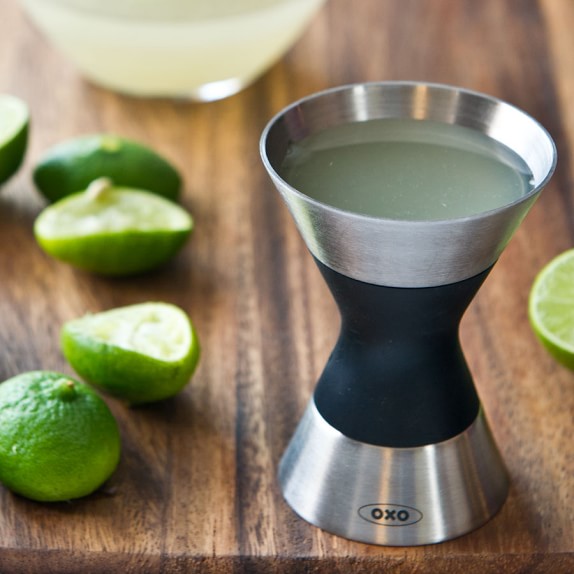
Juicing citrus is fairly simple. If the stem of your fruit is a "pole", cut the fruit in half along the equator. insert the fruit cut side down onto the juicer, be it a hand juicer, press, or mechanical. If there's an interuption you can leave the cut fruit up to 2 hours before juicing.  Apply pressure manually, or through the lever until the juice is extracted down to the pith. Juice into a china cap over a cambro. When juicing to order (a la minute) you can squeeze directly into a jigger for cocktail service. This has some drawbacks though.

I don't recommend juicing anything a la minute. every different piece of produce you juice will have different sugar and acid content. Also depending on the pulp in your juice and how you strain the cocktail, you could be getting wildly different yields. juicing in large batches and straining allows for greater consistency over the course of the shift. Some people like the pageantry of seeing the fresh juice squeezed in front of them but it does lead to less consistency overall.

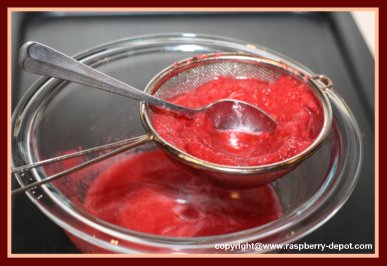
A simple way to juice berries or other soft fruits like kiwis at home is to just muddle them through a mesh strainer over a container. After you've mashed a bit, scrape out the spent pulp from the inside. This keeps the strainer from getting too clogged. The mesh will catch all the skin and seeds and the liquid will flow through. Depending on the density of the mesh you made need to filter the juice more times.

Fresh juice has a fairly narrow window for their ideal flavor. Lemons, limes, and grapefruit are delicious freshly juiced but many people think they get even more flavorful after a few hours of rest and are good up to 2 days (48 hours) later. The shelf life of oranges is a bit less forgiving. Oranges contain substances called lactones, which after juicing, develop into limonin which has a bitter flavor. Fresh is best wish oranges but you can use it up to 4 hours after without much issue.

Myth: Room temperature citrus yields more juice than cold produce.
This theory is odd. People think that the fruit sacks or cells are scrunched together and warming them up will ease the process of juicing. Some people even think that microwaving the fruit will make it possible to extract more juice. Don't do that. Everyone who has tested this has disproven this concept.  The yields are the same regardless. 

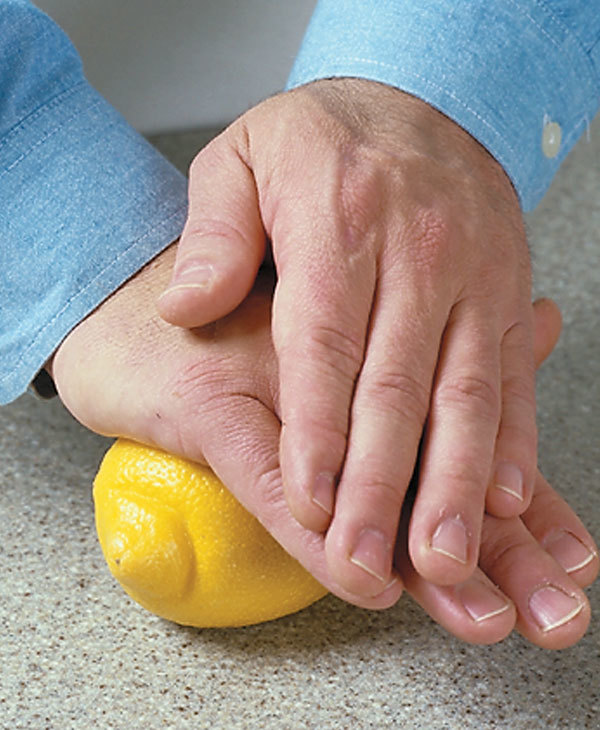
Myth: Rolling the citrus yields more juice.
This is the same silly idea. Even Jamie Oliver thought this works. No, it doesn't. People have tested it. Don't waste your time. A good press juicer extracts all the juice possible, you're not manifesting new juice.

Thursday, September 26, 2019

Juicers

Hand presses or clamshell or elbow juicers are the most common type of juicer I see in the home and are also found in some cocktail bars which utilize al la minute juice service. friendly reminder that when juicing halves of fruit they go flat side down, not conforming to the bowl shape of the press. Cut Side Down! Older styles had a flat base to match and no holes for drainage of juice, simply a pour spout on the side to dispense the fresh juice. Newer styles have a curved bowl to cause the half-cut citrus to partially flip inside out along with holes at the bottom to allow it to dispense into a tin or other receptacle. An issue with these style of juicer is the variable size of citrus and you'll most likely need a different one for lemons, small limes, and larger oranges and grapefruit. Material is important when purchasing. plastics can break easily some metals are much more difficult to clean than others, especially when scuffed after extended usage. Amco is a good durable metal brand. Norpro is a bit more expensive but many experts swear by it. Chef'n Force does a good job and alleviates strain on the wrist but does have a shorter lifespan I've found.

Standing levered presses are very popular in homes and in bars with a fresh juice program in medium but not excessive volumes. There are two main types, those with gears and teeth and those with a hinged concept that acts more like a scaled-up hand press. Hamilton Beach is the most common brand of the former and has become quite affordable. At volume, these do tend to break down after a few months, but they work amazingly well for home use. The parts can't practically be replaced and tuned other than some simple cleaning and oiling. Ra Chand is a fine example of the latter. It also has a much longer shelf life and requires less care, cleaning, and maintenance. It is a little clunky to operate, especially on a high bartop.

Motorized Reamers are widely utilized by bars juicing high volumes of juices. these are certainly more expensive but they do last substantially longer, making up for the cost in the long run. The preferred brand is Sunkist. These are HEAVY and noisy. They belong in the prep area of a bar/restaurant not anywhere near the front of the house. the fact that you're juicing your citrus by hand leans to a lot of strain on the hands and arms. There's minimal contact with the skin compared to press juicers so not a lot of oil is extracted, but you do yield a substantial amount of juice. Also, your hands do get messy. Wear gloves. Even then your hands will slip on the oil of the skin and the fruit will spin like it was the pottery wheel in ghost.

Fully automated juicers like Zumex were my best friend at several of the bars I've worked at. All you need to do is fill the hopper at the top with oranges (you can do other fruits but it'll wear on the blades and other parts) and the machine will slice it, press it (with pressure on the skin to extract oil), and partially filter large pulp from the juice. It's load and forget, no effort or strain on the body whatsoever. They are quite expensive though, upwards of two thousand dollars. not economical for home bartenders but ideal for bars with a busy morning/lunch crowd that enjoys fresh juice.


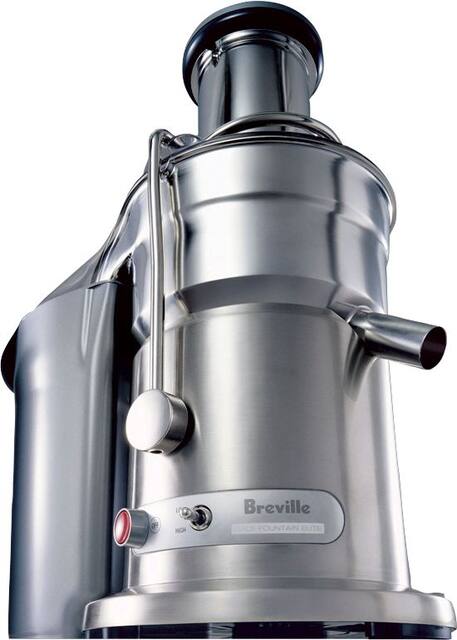
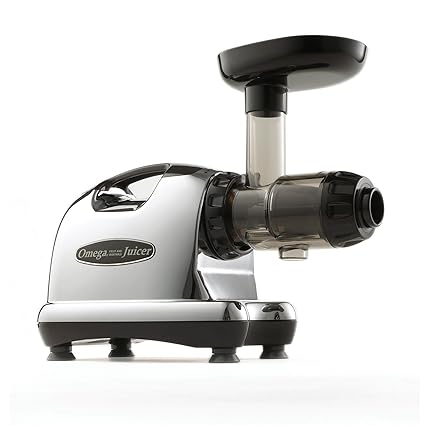
Juice extractors are the best way to extract liquid fruit fruits and some vegetables. They are broken into two types: Centrifugal Juicers, and Masticating Juicers. Centrifugal juicers spin a blade around slicing and dicing. They're basically motorized food mills that you'd use in the kitchen. They shred the produce and spin it allowing the juice to drain through and the pulp gets separated into a bin. Masticating juicers work almost exactly like a meat grinder, forcing the produce between gears to extract the trapped liquid. Centrifugal juicers do produce a lot more food waste and commonly yield 20% less juice than their masticating counterparts. A con of the masticating juicer is that it doesn't handle large chunks very well without clogging and jamming. you can shove a whole apple in a centrifugal juicer with no issue. So Masticating juicers need some extra prep. Both of these styles are great for pineapples, carrots, celery, rhubarb, ginger, and any other dense or stalky produce. Centrifugal juicers do lead to a lot of air going into the juice which for the most part will dissipate in time, but some bartenders will juice oranges in these a la minute to create a really fluffy textural drink like a garibaldi. Masticating juicers also have loads of attachments which make them very versatile. All kinds of things, like almond milk, butter, iced cream, baby food, and even make pasta can be made with the right attachment. Masticating juicers also are usually about twice the cost of centrifugal juicers, both in the couple hundred dollars range. Preferred brands are Breville and Omega. P.s. never put a banana in these.

Saturday, June 8, 2019

Natural Sage

My Third Award Winning Cocktail. I am properly proud of this drink. I took inspiration from my surroundings. I made a balanced drink which showcased the base. And I sold it like a champion. It's kind of a pain given the prep work required but the texture is so gorgeous. The inspiration was a nice brown butter sage sauce with truffle we'd use in the Italian restaurant I used to work in for our agnoletti. Old Forester Old Fashioned Face Off Philly Champion 2017. 

1 1/2 oz. Old Forester Classic 86 Proof
1/2 oz. Averna Amaro
1/4 oz. Brown Sugar Butter Syrup
2 dashes Dram Wild Mountain Sage Bitters
10 drops Bitter End Chesapeake Bay Bitters


Add all the ingredients to a mixing glass with ice. Stir until well chilled. Strain into a rocks glass with a large cube. Garnish with a sage leaf and a fresh lemon twist.

To make Brown Sugar Butter Syrup:
Add 1 stick of butter in a saucepan over medium heat. Stir until melted and lightly browned. Add 1 cup water with 2 cups of brown sugar and stir until all is dissolved and uniform. Strain into a wide mouth container and place in the refrigerator. After a few hours take out the syrup. Poke a hole through the solid puck that will have formed. Fine strain the syrup into a bottle of your choice. Store in the fridge.

The culinary inspiration of this cocktail turned it into something I am genuinely proud of. I would argue it is the current high point of my creativity as a bartender. I hope I can come back to this variety of creative drive.

"There are moments when all anxiety and stated toil are becalmed in the infinite leisure and repose of nature."
- Henry David Thoreau

Wednesday, May 22, 2019

Parting Glass


This was my entry for the Copper and Kings Mixt&pe competition. Make a drink to pair with a song. I've been getting into a lot of Classic Irish Folk music. It's a wonderful blend of comedy and tragedy. I chose The Parting Glass as my song, as performed by The High Kings. It rings of a final song, a goodbye, and the joys and lamentations of one's life. My cocktail reflects this balance. Fire's being extinguished, sweetness, bitterness, and intensity

1 oz. Copper & Kings Butchertown Brandy
1/2 oz. C&K Floodwall Apple Brandy
1/2 oz. Rooibos Tea infused Honey Syrup
6 -8 drops Bitter End Moroccan Bitters
Copper & Kings Absinthe Blanche

Add the brandies, honey, and bitters to a mixing glass. Add ice and stir for 12 seconds. Rinse a small cocktail glass with the absinthe and discard. Strain the cocktail into the rinsed coupe. Light a candle and raise your glass.

To make rooibos infused heather honey syrup:
Add 12 oz. of water and 12 oz of heather honey to a saucepan. Apply light heat and stir until well mixed. Measure out 2 tablespoons of loose leaf rooibos red tea and add it to the syrup. Let the tea infuse for about 5 minutes. Turn off the heat and strain through a mesh filter. Store in the refrigerator.

I can't say this cocktail is one of my favorites. I think I'm going to revisit this idea soon. 

Wednesday, May 15, 2019

Walking in Little Shoes

This was my entry for the Gentleman Jack Whiskey Sour Classic competition. I've been playing a lot with acid solutions, but they tend to fall a bit flat compared to fresh juice. They tend to lack some body and texture, and there are all kinds of flavors in juice besides just acids. We talk about balance in cocktails as a ratio of sugar to acid, and while that is crucial, it is also boring. 

2 oz. Gentleman Jack
1 oz. Acid-Adjusted Apple Juice
1 oz. Honey Syrup
2 dashes Bar Keep Apple Bitters

Add the fluid ingredients in a mixing tin, add ice and shake well for 6 seconds. Rinse the rim of a rocks glass with honey and rim with spicy cinnamon sugar. Add a large ice rock and strain the cocktail into the glass.

Spicy cinnamon sugar: 
Mix 16 parts sugar, 2 parts ground cinnamon, and 1 part cayenne pepper.

Acid-adjusted apple juice: 
To every 100 grams of apple juice, add 1 gram of citric acid and 4 grams of malic acid.

I loved my time down at the Jack Distillery. Kevin the Barrel Man was a hoot. The story of walking through the caves with a chicken on a string was absolutely hilarious. Bluffing his way into massive concerts is something that charmer could do without even trying. Amazing stories all around. Miss Mary Bobo's was a very eclectic, warm experience. The legacy of Jasper "Jack" Daniels lives on all the loyal workers of that entire town. 

"Basically, I'm for anything that gets you through the night - be it prayer, tranquilizers, or a bottle of Jack Daniels."
- Frank Sinatra